The way companies discover, assess, and hire professionals is undergoing its biggest transformation in twenty years.
For decades, the hiring process followed a predictable playbook: write a one- or two-page resume, polish your job titles, add bullet points packed with industry buzzwords, and submit the document to dozens of corporate portals.
Today, that playbook is failing qualified candidates.
Automated parsing tools, shrinking recruiter attention spans, and an overwhelming flood of applications have rendered traditional self-declared resumes insufficient on their own. Corporate talent teams are shifting to skills-first hiring—an evaluation model that prioritizes verified competence and visible proof of work over job titles and university prestige.
To navigate this shift successfully, professionals need to understand how hiring intelligence has changed and what decision-makers actually look for before extending an interview offer.
1. The Breakdown of the Self-Declared Resume
The fundamental flaw of the traditional resume is that anyone can claim anything on a PDF.
Phrases like "Spearheaded cross-functional initiatives," "Drove 40% revenue growth," and "Expert in cloud architecture" appear on thousands of applications every day. Because hiring teams cannot verify these statements from a flat piece of paper, several major changes have taken place:
Skepticism Toward Unbacked Bullet Points: Recruiters spend an average of six to seven seconds scanning a resume. Vague statements without accompanying documentation are routinely ignored.
The Rise of Skills-Based Taxonomies: Enterprise companies are moving away from rigid job titles. They now use talent intelligence platforms to map roles to specific clusters of demonstrable skills.
Overreliance on Algorithmic Filters: To manage candidate volume, companies rely on automated screening software to verify exact keyword matches, certifications, and structured data before a human ever looks at an applicant's background.
A resume is still required to pass the initial automated gatekeeper, but it is no longer enough to persuade a human hiring manager.
2. What "Proof-of-Work" Means Across Different Industries
The most significant trend in modern hiring is the demand for proof of work—tangible, verifiable artifacts that prove your capability before you walk into an interview room.
What this looks like depends on your discipline:
Engineering & Technology: It is no longer just about listing Python or React on a resume. Decision-makers look for links to deployed web applications, clean GitHub repositories, documentation samples, and architectural explanations.
Marketing & Growth: Instead of stating that you ran successful campaigns, recruiters look for case studies detailing the target audience, the channels used, the creative assets, and the resulting conversion rates.
Product & Design: Bullet points cannot convey visual or strategic reasoning. Reviewers expect interactive prototypes, user flow breakdowns, and explanations of why specific trade-offs were made during development.
Operations & Strategy: Decision-makers look for frameworks, executive summaries, published whitepapers, and structured problem-solving methodologies.
When a hiring manager can review real-world artifacts with a single click, the perceived hiring risk drops immediately.
3. The Rise of the Multi-Hyphenate Career
Another major shift in modern career intelligence is the death of the strictly linear career path.
An increasing number of professionals now build portfolio careers—balancing full-time leadership roles with advising, freelance consulting, open-source development, or content publication.
Traditional resumes struggle to capture this dynamic reality. A standard document forces you into a rigid chronological box that flattens your diverse accomplishments into a uniform list of past employers.
A modern professional presence requires a platform that accommodates multiple dimensions of your work: your core career milestones, your independent projects, your speaking engagements, and your advisory roles, all organized without cluttering your core resume.
4. The Two-Speed Requirement: Machine-Readable vs. Human-Engaging
Winning in today's recruitment market requires balancing two conflicting technical demands:
The Machine Requirement: You must have a clean, single-column, strictly formatted document (PDF and DOCX) that Applicant Tracking Systems can parse without reading errors or layer scrambles.
The Human Requirement: Once you clear the software filter, you must present a live, responsive web portfolio that gives busy human decision-makers an engaging, visual, and comprehensive look at your achievements.
Failing at either stage costs you the role. If your resume is too visually complex, the ATS rejects you. If your application is only plain text with no live work samples, the human reviewer moves on to someone who provided evidence.
5. How MyDigiFolio Aligns with the Future of Recruitment
Adapting to these career trends shouldn't require paying for multiple software tools, learning web development, or spending hours synchronizing disconnected profiles.
MyDigiFolio is built directly around modern talent intelligence needs:
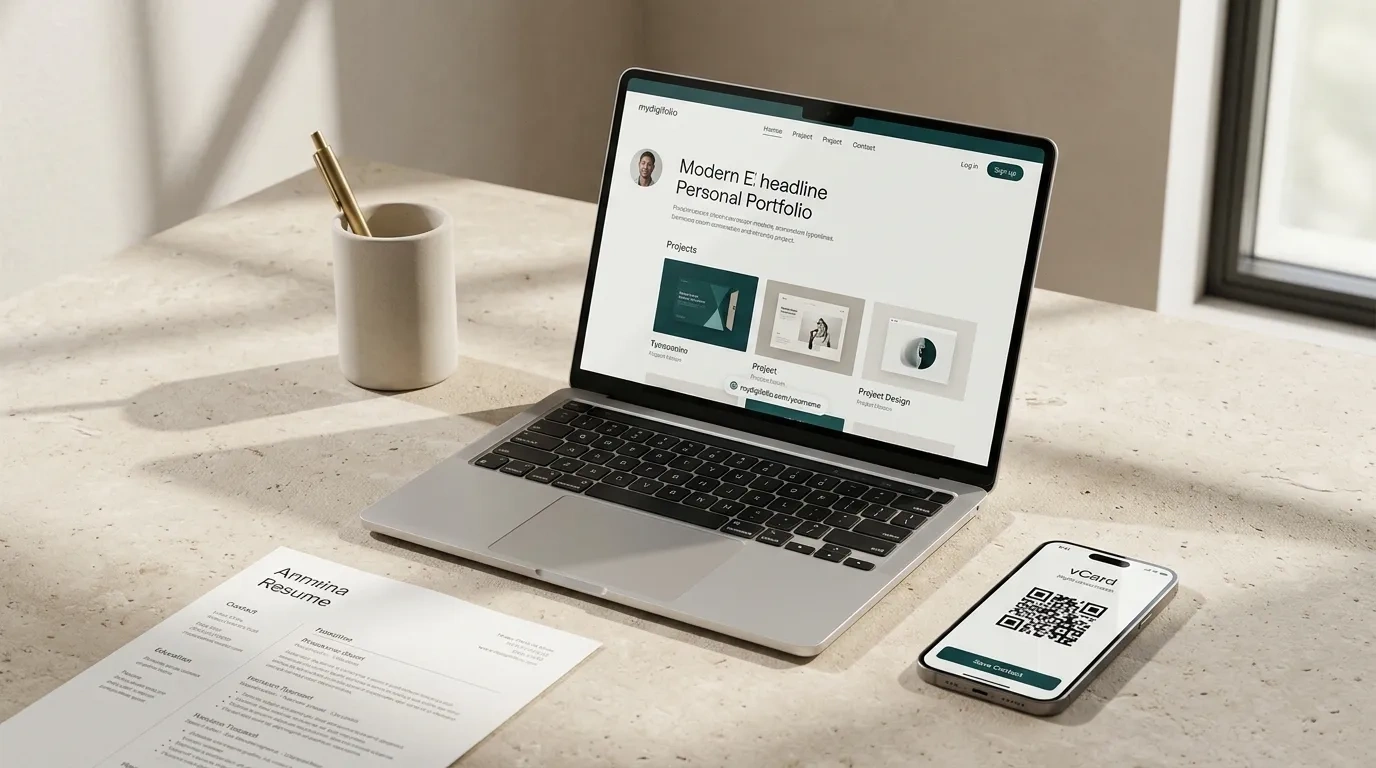
Structured ATS Compliance: Generate single-column, machine-readable PDF and Word resumes designed to clear corporate applicant tracking software with top accuracy.
A Live Proof-of-Work Showcase: Claim your personalized web portfolio at
[mydigifolio.com/yourname](https://mydigifolio.com/yourname), giving hiring teams immediate access to your case studies, verified skills, and project links with zero coding or hosting fees.Instant Digital Networking: Equip yourself with a scannable digital vCard to share your verified profile and contact details directly into someone's phone address book in seconds.
Interactive Email Sign-Off: Add a click-ready HTML signature to your Gmail or Outlook account, turning routine networking and cold outreach into direct portfolio discovery.
Centralized Data Management: Update your dashboard once when you ship a new project or earn a certification, and your downloadable resume, live portfolio, and digital card all stay in sync automatically.
Position Yourself for Where Hiring Is Going
The hiring landscape is moving permanently toward verified skill sets, transparent proof of work, and integrated professional branding.
Give corporate algorithms the clean data they need, and give human decision-makers the proof of capability they want to see.
👉