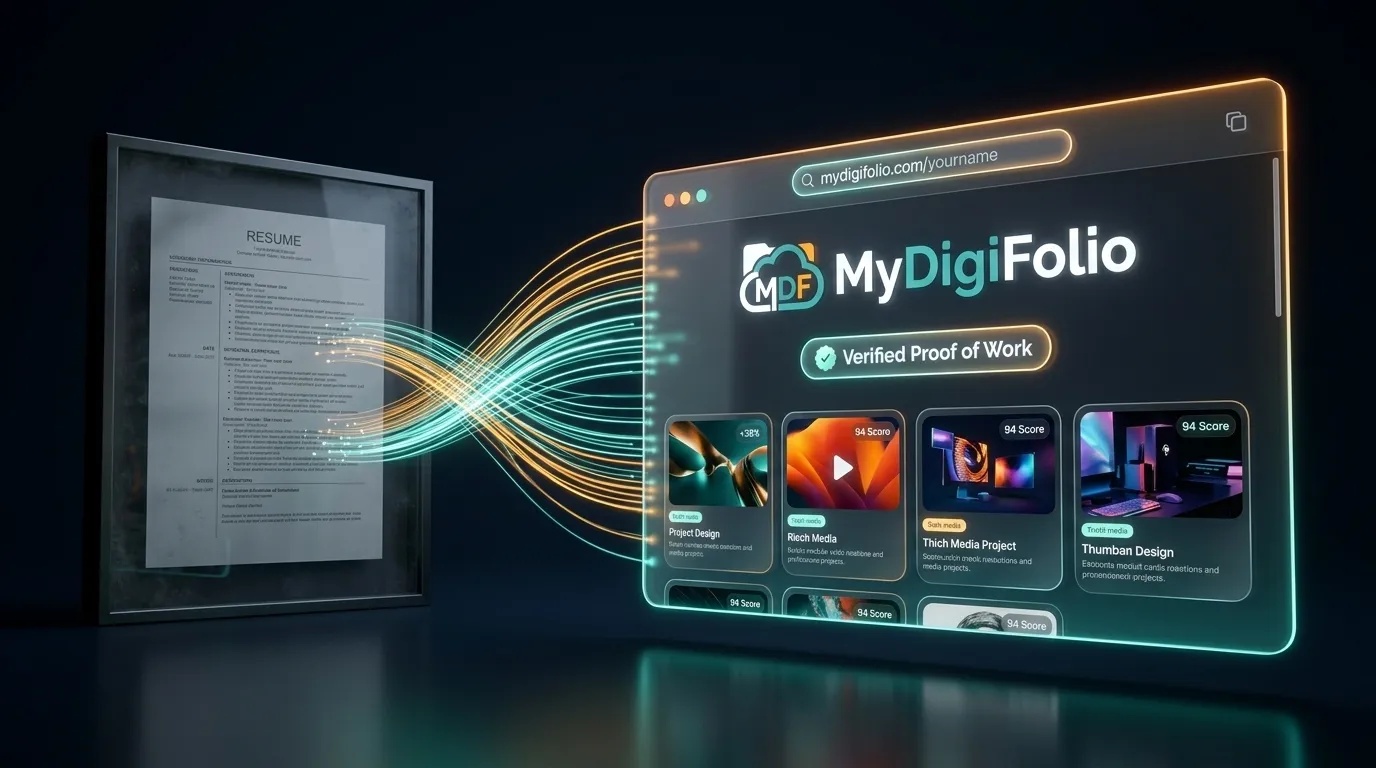
For decades, the standard one-page PDF resume has served as the universal currency of the job market. You summarized your career in reverse chronological order, squeezed bullet points into 10-point font, exported the document, and uploaded it into company applicant portals.
While applicant tracking software still requires a parsed text document, relying solely on a static PDF to sell your capabilities to an actual hiring manager has become a major disadvantage.
Today's recruitment landscape moves fast, and candidate competition is global. A static document flattens your projects, problem-solving abilities, and design thinking into generic bullet points. To stand out, modern professionals are turning to personal portfolio URLs that provide tangible proof of their work.
1. The Fundamental Limitation of the One-Page PDF
The standard resume was designed for an era when applications were printed on paper and filed in physical cabinets. In a digital-first hiring ecosystem, forcing an entire career onto a single sheet creates two major problems:
Text Without Context: Claiming you "led cross-functional teams to increase conversions by 32%" sounds impressive, but it gives the hiring manager no visual or structural proof. They cannot see the interface, the code, the copy, or the strategic process behind the metric.
Artificial Space Constraints: Cutting valuable projects or compressing technical competencies just to keep the document under one page forces you to hide the exact work that proves your qualifications.
A PDF can tell someone what you did, but it cannot show them how you did it.
2. What Recruiters Look for Beyond the Resume
When a hiring manager reviews a shortlist of qualified candidates, they are trying to answer a specific question: Can this person execute at the level we need on day one?
An interactive personal portfolio answers that question immediately by providing:
Live Work Artifacts: Interactive dashboards, live web links, design system breakdowns, writing samples, or embedded GitHub repositories.
End-to-End Case Studies: A walk-through of your problem-solving process—identifying the challenge, navigating roadblocks, collaborating with teammates, and measuring the outcome.
Verified Credentials & Tech Stack: A curated, categorized directory of the exact tools, programming languages, and certifications you use daily
. Personal Brand and Voice: An authentic introduction that communicates your professional values, work philosophy, and communication style before the initial screening call.
3. The Power of a Unified Personal URL
Sending recruiters a string of loose Google Drive links, Dropbox folders, and separate social handles introduces friction. If a link requires permission or looks unprofessional, recruiters will skip it.
Having a dedicated, clean URL—such as [mydigifolio.com/yourname](https://mydigifolio.com/yourname)—creates instant authority
Memorability: A short, branded link fits neatly into your resume header, your LinkedIn summary, and your email signature
. Instant Mobile Accessibility: When meeting colleagues, clients, or recruiters at events, sharing a single live link or scannable contact card is far more effective than emailing an attachment
. Real-Time Accuracy: Unlike a downloaded PDF sitting in a recruiter’s download folder for months, your live web portfolio always displays your latest achievements, certifications, and project updates.
4. The Ideal Setup: The ATS Resume and Portfolio Symbiosis
Embracing personal portfolio URLs does not mean throwing away the resume. Instead, the most successful candidates understand that the resume and the portfolio serve two distinct stages of the hiring funnel:
The Gatekeeper (ATS): A clean, single-column, machine-readable resume designed to pass automated applicant tracking systems without formatting errors
. The Decision-Maker (Hiring Manager): A live portfolio URL prominently featured in your resume header that gives human reviewers an interactive dive into your work
.
When these two assets mirror and reinforce each other, you satisfy both automated algorithms and human decision-makers.
5. Build Your Live Portfolio in Minutes with MyDigiFolio
Designing a website from scratch, paying for annual web hosting, and updating multiple templates whenever you change roles is an unnecessary hurdle.
MyDigiFolio solves this by unifying your career presence into a single dashboard
🌐 Your Dedicated Web Portfolio: A sleek, mobile-responsive page hosted at
[mydigifolio.com/yourname](https://mydigifolio.com/yourname)to showcase your case studies, bio, and verified credentials. 📄 ATS-Optimized Resumes: High-scoring PDF and DOCX downloads built to clear enterprise recruitment filters
. 📱 Digital vCard & QR Code: A scannable contact card that saves your information directly to any smartphone address book
. ✉️ Branded HTML Email Signatures: Clickable signatures for Gmail, Outlook, and Apple Mail that keep your outreach on-brand
.
Stop letting your career get lost in static documents.