AI & TECH
AI Disruption Leaves China’s Software Workers Facing Layoffs and Job Insecurity
MyDigiFolio Editors
2 min read
AI & TECH
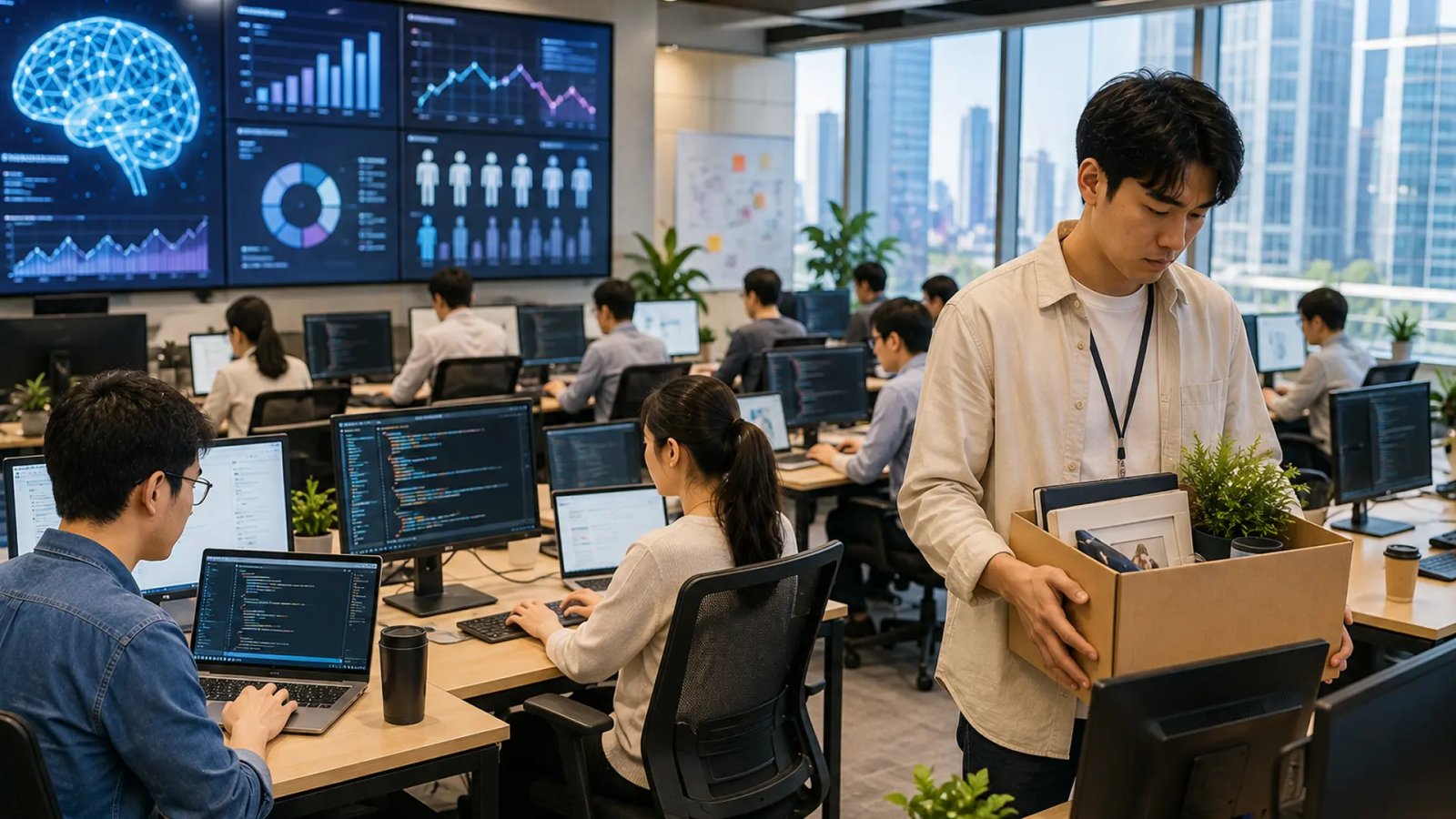
AI may not simply eliminate jobs—it is changing how many people companies need, what skills they value and how quickly work gets done. Software professionals who combine technical expertise with AI capabilities could be better positioned as the industry evolves.
China’s software industry is facing growing employment uncertainty as companies rapidly adopt artificial intelligence tools capable of automating increasingly sophisticated coding and other knowledge-intensive tasks.
The shift is raising concerns that smaller teams supported by AI could produce significantly more software, potentially reducing demand for some traditional programming roles. The impact is being felt across China’s technology workforce, where software jobs have historically offered strong salaries, career progression and a pathway into the middle class.
The disruption is particularly significant given the scale of China’s technology workforce. The country has more than seven million software engineers, while its software and information technology services industry employed around 8.09 million people in 2021, according to figures cited in the report.
Layoffs are also affecting experienced professionals. Workers in their 30s and 40s are facing increased vulnerability as companies restructure teams, reduce costs and reorganise operations around AI-enabled productivity.
The employment pressure is extending beyond job searches. Workers who built their financial lives around technology-sector salaries are dealing with mortgages, education expenses and weaker property values while facing longer periods between jobs.
AI coding tools are accelerating the transformation. Tasks that previously required weeks or months of development can increasingly be completed in substantially less time, changing the skills and workforce requirements of software companies.
For employers, the trend highlights a shift from simply hiring more programmers toward building teams that can effectively combine technical expertise with AI tools. For software professionals, keeping pace with AI-assisted development and developing skills that complement rather than compete directly with automation could become increasingly important.

Analytics India Magazine · 3 weeks ago
India’s data centre expansion is broadening employment demand beyond software and other traditional technology roles. The latest hiring data...

GlobeNewswire · 3 weeks ago
Paychex has expanded its WISE AI platform with WISE Hire, bringing AI-powered automation to recruiting and hiring workflows. The solution co...

Reuters · 3 weeks ago
Verizon is expanding its investment in AI workforce training to support job seekers, small businesses and educators across the U.S. The init...
From MyDigiFolio
One profile. Resume, vCard, portfolio, and email signatures — all generated in 3 minutes.
Build your page — freeWe use essential cookies for login and preferences, and optional cookies for analytics. Privacy policy.