AI & TECH
Big Tech AI Infrastructure Spend to Cross $1 Trillion by 2027 as Financing Pressure Mounts: UBS
MyDigiFolio Editors
2 min read
AI & TECH
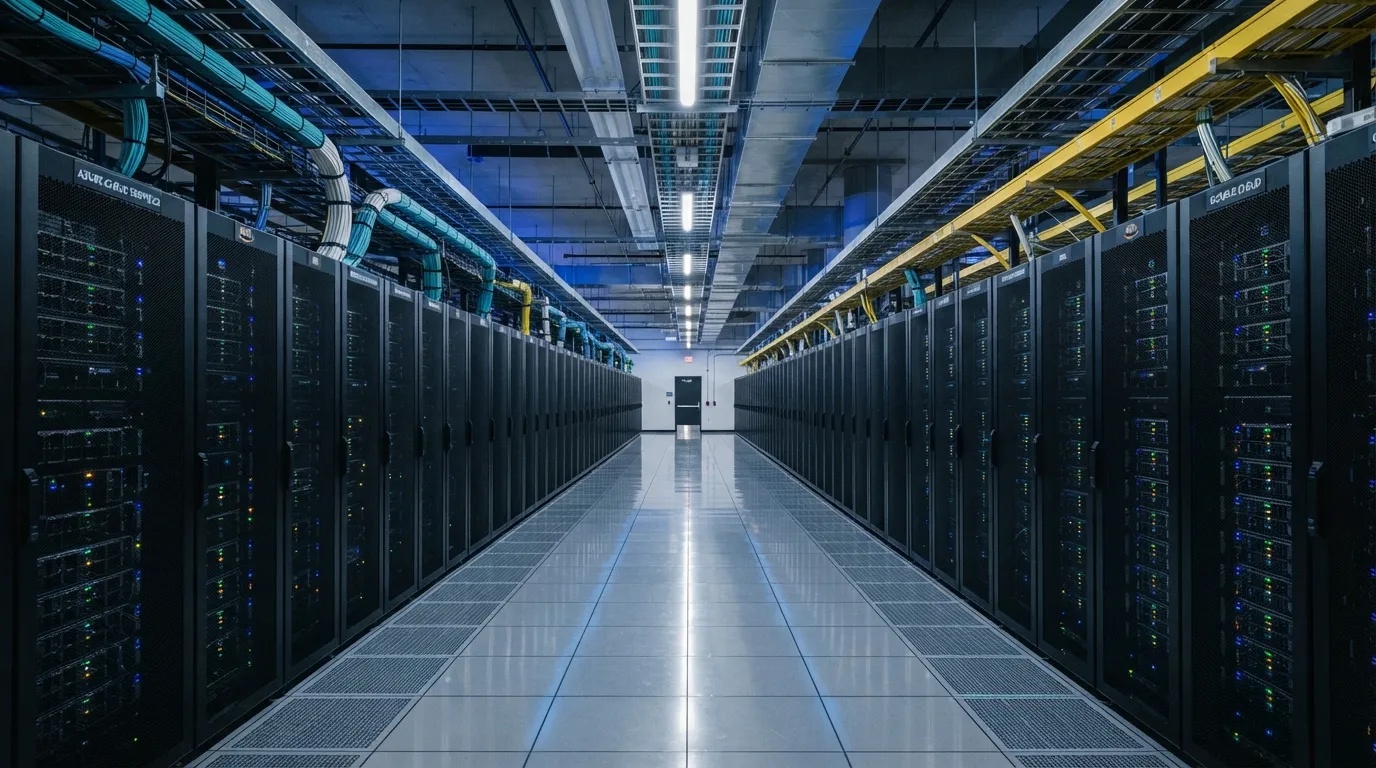
Major technology giants are on track to pour more than $1 trillion into artificial intelligence infrastructure in 2027, crossing the $600 billion annual capex mark in 2026 alone as compute demand continues to outpace supply. While the unprecedented buildout contributed 0.75 percentage points to US GDP growth in early 2026, UBS warns that deteriorating corporate free cash flow and cooler bond appetite could force the spending cycle to peak by 2027.
Big Tech’s scramble to corner the market on computing capacity is hurtling toward an unprecedented milestone: global infrastructure spending on artificial intelligence is projected to surpass $1 trillion in 2027, according to a new macroeconomic assessment from investment bank UBS.
The spending trajectory is accelerating rapidly, with annual capital expenditure by leading tech conglomerates expected to easily breach $600 billion in 2026 before topping the trillion-dollar mark the following year. The driver remains unchanged—enterprises are consuming compute faster than semiconductor fabs and data centers can build it.
Macroeconomic Engine vs. Balance Sheet Strain The sheer volume of capital deployed into silicon, concrete, and energy has turned AI into an engine of broader economic output:
GDP Driver: UBS estimates that AI infrastructure spending added roughly 0.75 percentage points to US GDP growth in the first half of 2026 alone.
Wealth Effect: Sustained equity gains in AI-linked megacaps have boosted household wealth and bolstered consumer spending.
Debt and Cash Flow Headwinds: The breakneck pace of expenditure is taking a noticeable toll on corporate balance sheets. Major tech firms are seeing free cash flows deteriorate, while debt markets are showing signs of fatigue, with institutional demand for fresh bond issuances softening.
UBS expects the aggressive pace of annual spending expansion to peak in 2027 as tech boards confront heavier financing obligations and public markets demand positive free cash flow returns by 2028.
The Labor Divergence: Coders Down, Builders Up The report highlights a growing paradox in the workforce data: while AI is drawing trillions in capital, it has yet to generate measurable broad-based productivity jumps, keeping its net impact on general unemployment under 0.2 percentage points.
Beneath the surface, however, labor demand is splintering dramatically:
Tech Sector Contraction: Employment across specialized high-tech segments—including software engineering and computer systems design—slid 1.4% year-on-year as corporate budgets tilt away from headcount toward raw compute.
Industrial Construction Surge: In stark contrast, construction jobs tied directly to data center development and electrical infrastructure surged nearly 3% over the same timeframe.
As AI workloads simultaneously drive up prices across business software, digital services, and regional power utilities, the trillion-dollar milestone is turning into the ultimate solvency test: tech giants must rapidly convert experimental agentic software into recurring, cash-generative enterprise revenue before the financing window narrows.
The Hacker News · 2 days ago
The PHP team has rushed out emergency fixes for "PHP2Shell," twin 9.2-severity flaws in the core runtime that let unauthenticated attackers...

Business Standard · 2 days ago
Microsoft researchers have built an AI system that mirrors the iterative reasoning of seasoned clinicians, outperforming general physicians...
ETDataCenters (The Economic Times) · 3 days ago
Anthropic is preparing to deploy up to $750 billion on computing power in the coming years, having already locked itself into roughly $450 b...
From MyDigiFolio
One profile. Resume, vCard, portfolio, and email signatures — all generated in 3 minutes.
Build your page — freeWe use essential cookies for login and preferences, and optional cookies for analytics. Privacy policy.