AI & TECH
Bloomberg AI Teams Unveil 5 EMNLP 2026 Papers Tackling Enterprise RAG, Multimodal Search, and Legal Reasoning
MyDigiFolio Editors
2 min read
AI & TECH
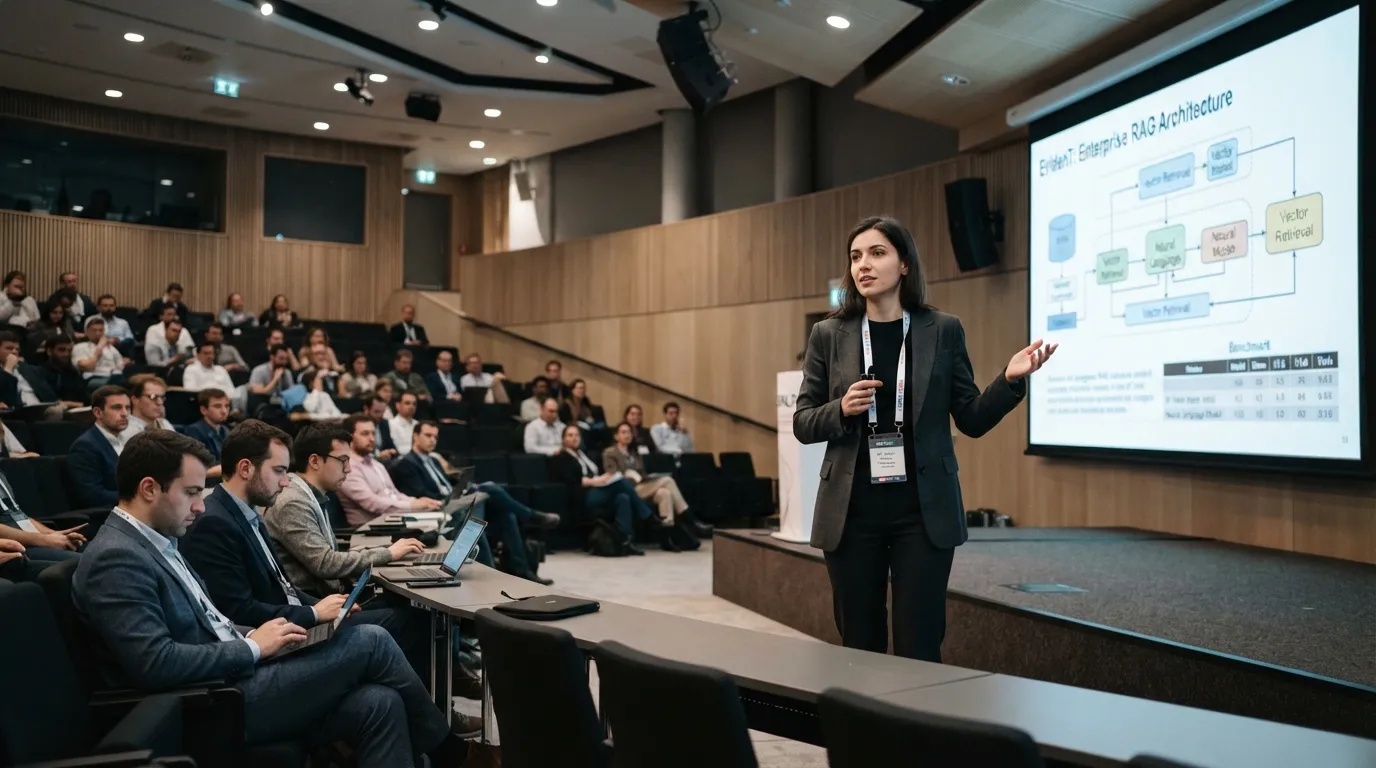
Bloomberg AI researchers are presenting five papers at EMNLP 2026 in Budapest, detailing production-ready advances across enterprise RAG, multimodal search, and legal inference. Key breakthroughs include EvidenT—a lightweight pipeline that sharpens citation traceability in live enterprise deployments—and MIDR, which pre-processes visual layout data at indexing to slash multimodal search latency. The research also probes frontier AI limits, finding models struggle to prove program termination.
At the 2026 Conference on Empirical Methods in Natural Language Processing (EMNLP 2026) in Budapest, Hungary, Bloomberg’s AI engineering groups and CTO Office research divisions are presenting five papers aimed directly at solving AI reliability in high-stakes financial and legal domains.
The disclosures bridge foundational computer science questions with enterprise deployment challenges, presenting technical solutions tested against real user query traffic inside Bloomberg's global production networks.
Grounded Enterprise RAG and Lean Multimodal Search Two papers focus on eliminating hallucination and latency bottlenecks across corporate knowledge retrieval:
Traceable RAG with EvidenT: Bloomberg introduced EvidenT, a lightweight framework designed to enforce grounded responses and clean source attribution for enterprise retrieval-augmented generation (RAG). Evaluated against live queries from an internal production deployment, the pipeline improves citation traceability without inflating inferencing costs.
Low-Latency Multimodal Retrieval via MIDR: Standard multimodal document processing is notorious for driving up serving costs and latency. Bloomberg’s MIDR framework bypasses run-time image bottlenecks by shifting visual layout and spatial reasoning to the initial document-indexing phase. This enables text-centric query serving over visually complex financial reports, balance sheets, and PDF filings without requiring expensive real-time computer vision passes.
Advancing Computational Legal Inference Bloomberg’s legal technology teams detailed two complementary architectures built to interpret dense statutory material:
PercepLog: The system combines classical backward-chaining logic with large language model reasoning loops, delivering auditable, step-by-step statutory deductions for corporate compliance and legal discovery.
Event Knowledge Graphs: Presented at the Natural Legal Language Processing (NLLP) Workshop, this framework converts unstructured federal employment-discrimination complaints into interconnected semantic knowledge graphs, accelerating cross-case precedent retrieval.
Benchmarking Frontier Limits: The Halting Problem Rounding out the research, Bloomberg engineers subjected top foundation models to Alan Turing’s classic Halting Problem to evaluate mathematical rigor. The findings revealed a stark capability disconnect: while frontier LLMs can frequently predict whether a given code routine will terminate, they exhibit a widespread inability to generate formal mathematical proofs backing their conclusions—highlighting the lingering boundary between probabilistic code generation and true programmatic verification.

ETTravelWorld (The Economic Times) · 4 hours ago
Artificial intelligence agents are on track to manage or authorize 37% of corporate travel budgets globally by 2028, representing $700 billi...

Business Standard · 4 hours ago
Marking a decade leading HCLTech, CEO C Vijayakumar warned that artificial intelligence has pushed the IT services sector to a historic infl...
The Economic Times (ETtech) · 5 hours ago
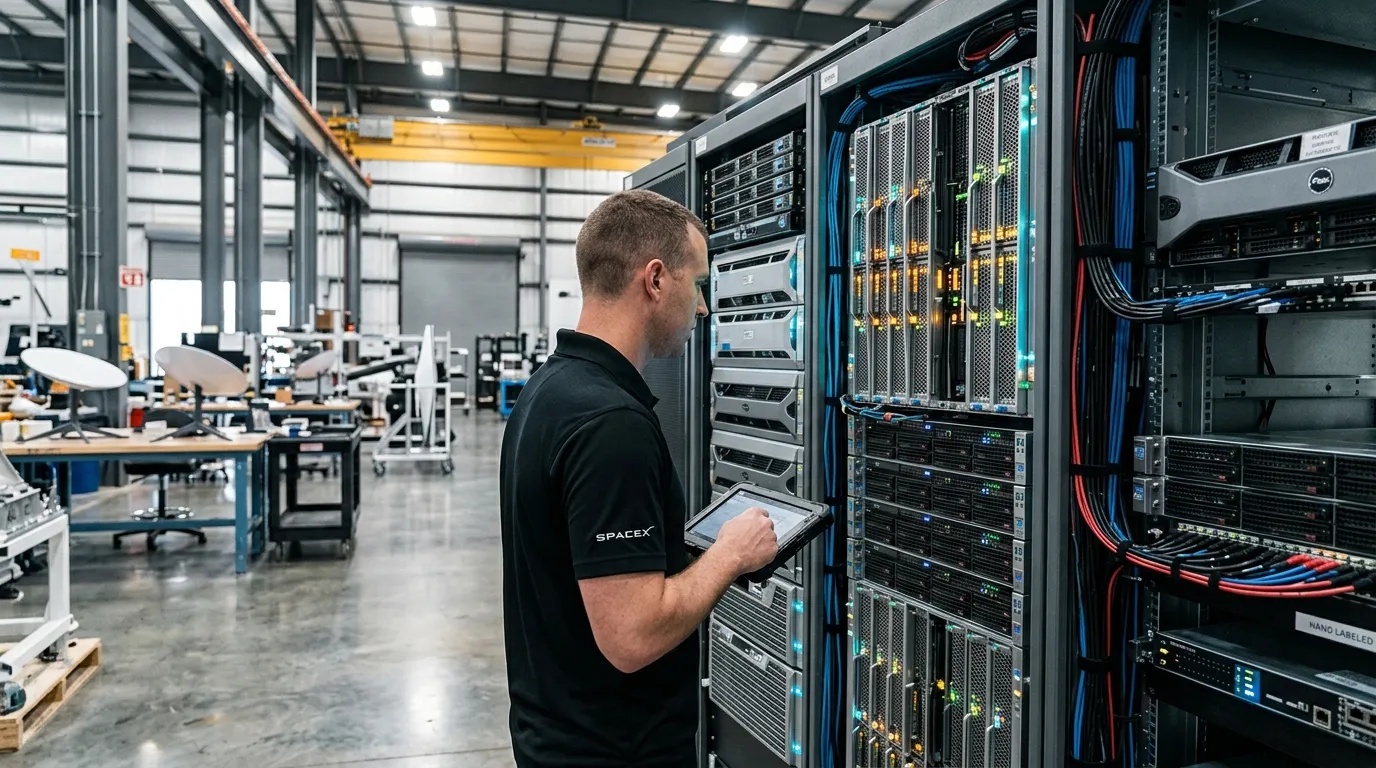
SpaceX has closed $40 billion in callable debt financing to fund a massive procurement of Nvidia GPUs arriving early next year, Elon Musk co...
From MyDigiFolio
One profile. Resume, vCard, portfolio, and email signatures — all generated in 3 minutes.
Build your page — freeWe use essential cookies for login and preferences, and optional cookies for analytics. Privacy policy.