BUSINESS
Dubai gold prices fall as oil surge and US-Iran tensions shake markets
MyDigiFolio Editors
2 min read
BUSINESS
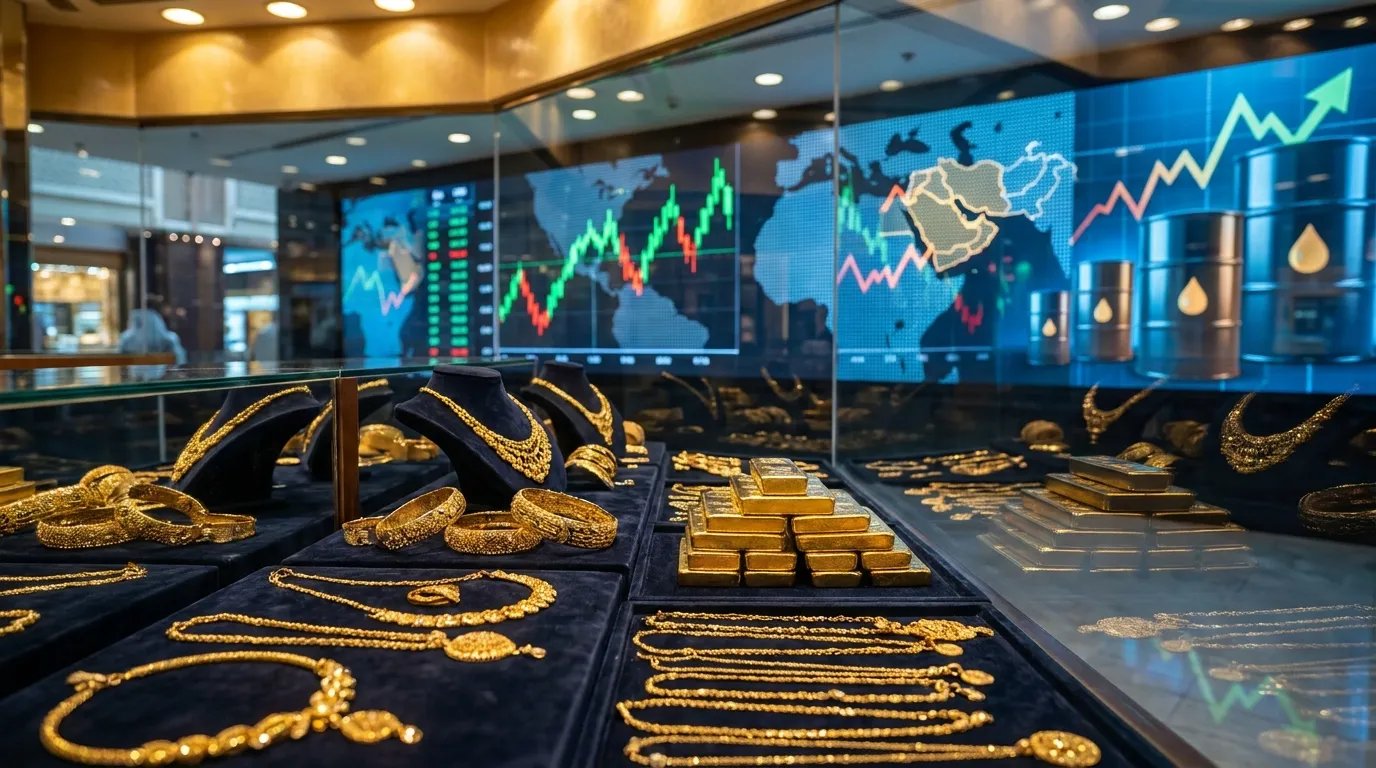
Gold prices are reacting to a complex mix of geopolitical tension, oil market volatility and shifting investor expectations. While diplomatic progress is easing safe-haven demand temporarily, instability in the Middle East continues to keep global commodity markets highly unpredictable.
Gold prices in Dubai declined significantly on Tuesday morning as escalating geopolitical tensions between the United States and Iran pushed oil prices higher and unsettled global financial markets.
According to data released by the Dubai Jewellery Group, 24K gold prices fell by Dh4.5 per gram in early trading, dropping from Dh549.75 to Dh545.25 per gram. Other gold variants also recorded declines, with 22K trading at Dh505.00, 21K at Dh484.25, 18K at Dh415.00 and 14K at Dh323.75 per gram.
International spot gold prices were also under pressure, falling 0.9% to approximately $4,529 per ounce, while silver prices dropped around 2%.
The decline in gold prices came despite ongoing geopolitical instability in the Middle East, largely because investors reacted positively to recent comments suggesting progress in diplomatic negotiations between the US and Iran.
Over the weekend, both American and Iranian officials indicated that peace discussions were advancing, temporarily reducing safe-haven demand for gold. However, markets remain highly volatile as military tensions continue across the region.
Oil markets reacted sharply after reports emerged that US forces conducted strikes in southern Iran targeting missile launch sites and vessels allegedly involved in laying mines near strategic shipping routes.
As a result, Brent crude prices surged 2.5% to nearly $98.54 per barrel, adding fresh concerns about global energy supply disruptions and inflation risks.
Analysts say the situation highlights growing uncertainty across commodity markets. While hopes for a diplomatic breakthrough are improving investor sentiment in some areas, damage to Middle East oil infrastructure and ongoing military activity continue creating instability in energy markets.
Market experts also warned that prolonged supply disruptions could slow the normalisation of global oil flows, potentially leading to higher transportation costs, inflationary pressure and further volatility in gold and currency markets.
Kelvin Wong, Senior Market Analyst at Oanda, noted that the market is increasingly pricing in the possibility of interest rate hikes later this year due to rising energy prices and inflation concerns.
Dubai’s gold market remains highly sensitive to global geopolitical developments because the emirate serves as one of the world’s largest gold trading hubs and retail jewellery markets.
Jewellery retailers and investors across the UAE are closely monitoring both oil prices and ongoing US-Iran negotiations, as further escalation or progress in peace talks could significantly influence gold demand and regional economic sentiment.

The Hindu · 2 weeks ago
U.S. President Donald Trump has announced that Essar Group subsidiary Mesabi Metallics will invest $15 billion to build the largest steel mi...

Reuters · 3 weeks ago
US jobless claims remained near historically low levels in mid-September, suggesting the labor market has regained stability despite ongoing...

Reuters · 1 month ago
Adyen is planning further expansion and hiring in India as it targets the country's growing digital payments and cross-border commerce marke...
From MyDigiFolio
One profile. Resume, vCard, portfolio, and email signatures — all generated in 3 minutes.
Build your page — freeWe use essential cookies for login and preferences, and optional cookies for analytics. Privacy policy.