IN BRIEF
Elon Musk Warns Over 200 AI Neoclouds Face Wipeout as Debt Markets Freeze Unhedged Compute
MyDigiFolio Editors
2 min read
IN BRIEF
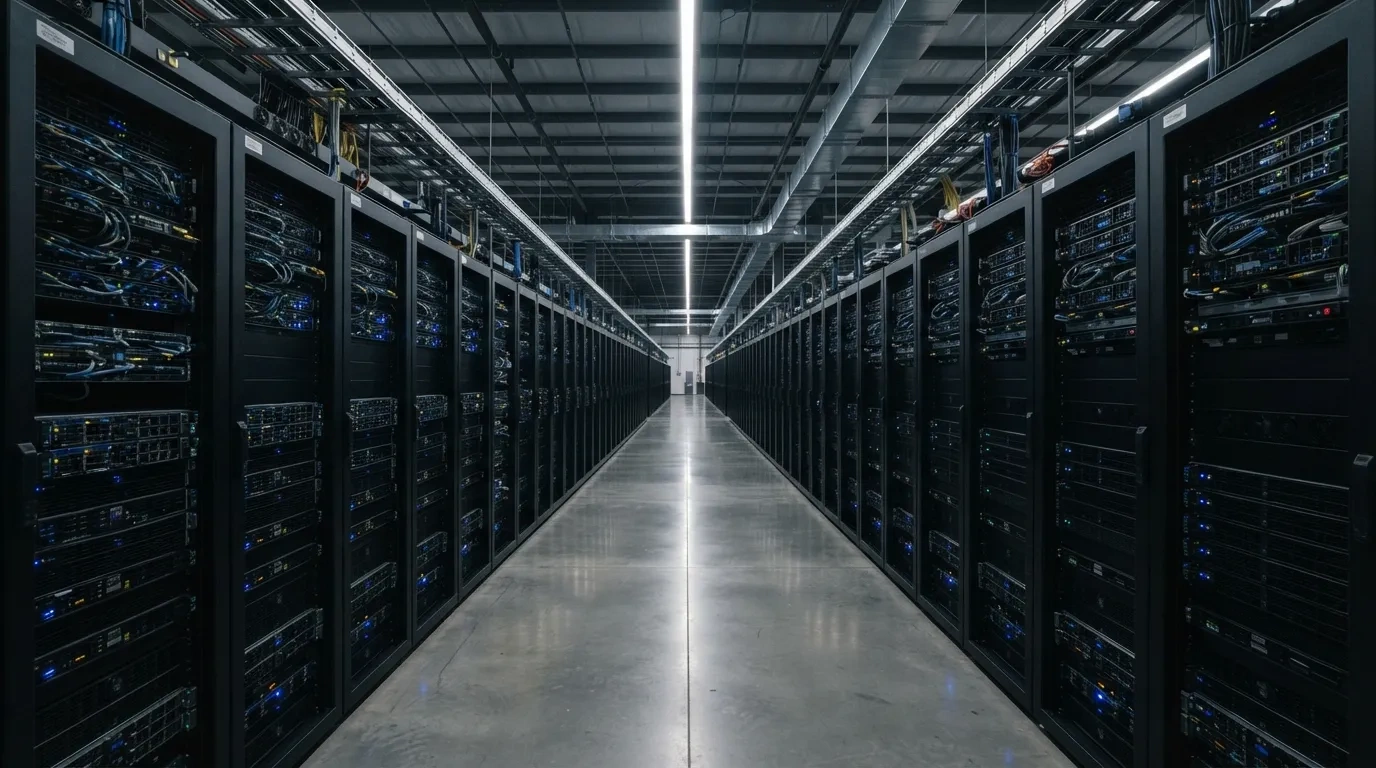
SpaceX CEO Elon Musk has warned that over 200 specialized AI neocloud providers face imminent collapse or forced consolidation as credit markets pull back from unhedged computing ventures. With debt investors closing off funding for operators lacking revenue outside AI data centers, specialized GPU hosts face severe liquidity crunches. The warning aligns with Gartner projections that 80% of neoclouds will shutter by 2030, driven by a staggering $5 trillion gap between infrastructure outlays and actual AI revenue.
The capital-intensive boom underpinning artificial intelligence infrastructure has run directly into a credit wall. SpaceX and xAI CEO Elon Musk has warned that over 200 specialized neocloud providers face "guppy-level death and consolidation," as institutional debt markets cut off access to capital for operators lacking diversified, non-AI revenue foundations.
The remarks arrive as bond markets and private credit lenders grow cautious about heavily leveraged GPU hosts that financed multi-billion-dollar hardware clusters on the premise of uninterrupted demand. Musk explicitly dismissed any prospect of SpaceX stepping in to acquire distressed neocloud assets at discounted valuations, asserting that his enterprises remain insulated due to independent cash generation from Starlink commercial operations and an existing $40 billion debt financing structure.
The $5 Trillion Revenue Mismatch The credit crunch reflects widening structural imbalances between data center infrastructure spending and actual monetization across enterprise software:
The Revenue Deficit: According to market projections from Gartner, data center developers need to generate $8.6 trillion in revenue to service debt obligations, capital depreciation, and facility expansion costs. However, projected consumer and enterprise AI software spending is forecast to reach only $3.6 trillion—leaving an unsustainable $5 trillion revenue gap.
The 80% Mortality Projection: Gartner estimates that 80% of neocloud providers will cease independent operations by 2030, driven by unmanageable debt service costs and a lack of differentiated proprietary software moats.
Capital Competition: Specialized compute providers are also competing against sovereign debt issuance and expanding government deficits for liquidity, driving up borrowing yields across the corporate credit spectrum.
Debt Shocks and Collateralized GPUs While balance-sheet-heavy hyperscalers such as Microsoft, Google, and Amazon can absorb negative cash flows through legacy cloud and advertising revenue, standalone GPU rental companies face severe exposure:
Bond Market Tremors: Secondary market trading for specialized cloud debt has shown clear signs of stress, with long-term bonds from tier-two providers sliding well below par.
Hyperscaler Cash Burn: Even dominant tech giants are feeling the weight of infrastructure outlays; Meta recently reported a negative $2.1 billion in free cash flow following an unprecedented wave of data center hardware procurement.
Flight to Quality: Responding to broader credit concerns, GPU cloud provider CoreWeave contended that sophisticated institutional lenders are making a sharp distinction between speculative, uncontracted capacity and established operators backed by verified tier-one enterprise contracts, investment-grade clients, and proven delivery track records.
As private credit funds, special-purpose vehicles (SPVs), and asset-backed securities tighten covenants, the era of zero-barrier debt for specialized AI compute has ended—setting up a wave of insolvencies for over-leveraged infrastructure startups.

ETHRWorld (The Economic Times) · 7 hours ago
Nearly 60% of organizations remain confined to experimental AI pilot phases, with only 40% successfully advancing systems into enterprise pr...
The Economic Times · 1 week ago
Volkswagen’s executive board is reportedly planning a global salary freeze through 2030 across its 660,000-strong workforce, paired with cut...

The Economic Times · 1 week ago
A Bengaluru-based BTech graduate in Artificial Intelligence and Machine Learning sparked debate on Reddit after offering 100% of their first...
From MyDigiFolio
One profile. Resume, vCard, portfolio, and email signatures — all generated in 3 minutes.
Build your page — freeWe use essential cookies for login and preferences, and optional cookies for analytics. Privacy policy.