CAREERS
Freshers Are Not Disappearing, Their Jobs Are Changing: Cognizant India Chief Rajesh Varrier on AI Hiring
MyDigiFolio Editors
2 min read
CAREERS
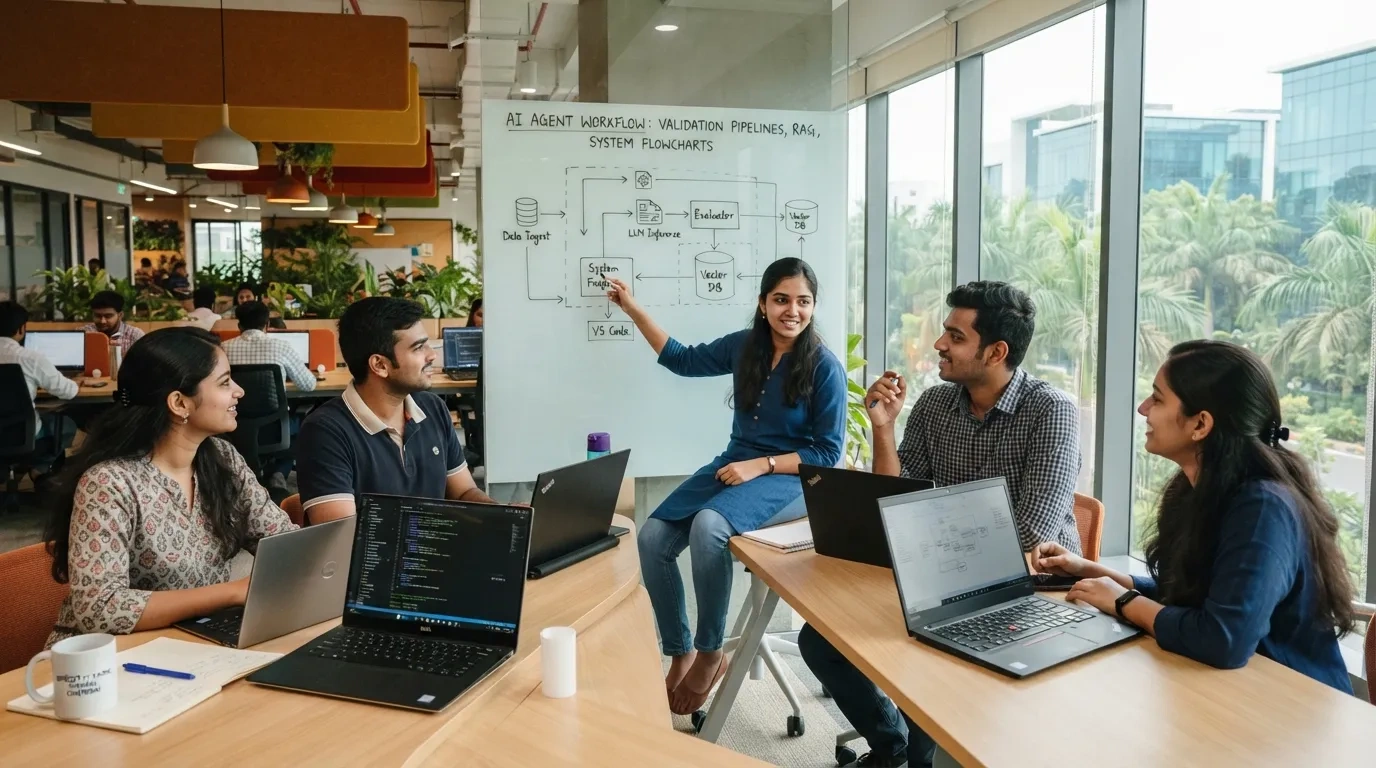
Artificial intelligence is fundamentally transforming entry-level technology roles rather than erasing them, according to Cognizant India Chairman and MD Rajesh Varrier. While Indian enterprises estimate that 37% of entry-level tasks are already automated by AI—above the 33% global average—Cognizant is bucking the broader campus hiring slowdown by targeting 24,000 to 25,000 fresher hires in 2026, up 20% from last year. Varrier emphasized that basic coding and manual testing are no longer sufficient; incoming graduates must pivot toward validating AI outputs, managing exceptions, and exercising
As India’s information technology sector grapples with a sharp slowdown in traditional campus recruitment, Cognizant India Chairman and Managing Director Rajesh Varrier argues that artificial intelligence is reshaping early-career software roles rather than making graduates obsolete.
In an interaction with Business Today, Varrier pointed to findings from the June 2026 Cognizant–Pearson study, The AI Workforce Pulse: The Adaptability Imperative, noting that while Indian organizations estimate 37% of entry-level tasks are already handled by AI (surpassing the 33% global average), 94% of surveyed HR leaders expect AI to create entirely new entry-level roles that do not exist today.
From Routine Execution to AI Validation and Judgment Although Nasscom President Rajesh Nambiar recently acknowledged that slowing campus hiring poses a real concern for fresh graduates—even as overall Indian tech headcount grew by 135,000 in FY26, largely led by Global Capability Centres (GCCs)—Varrier contends that the nature of entry-level work is evolving upward:
Redefining Daily Workflows: Junior engineers are moving away from repetitive coding and routine manual testing toward validating AI-generated outputs, interpreting analytical insights, managing workflow exceptions, and applying domain judgment.
Bridging the Campus-to-Corporate Gap: Varrier flagged the persistent disconnect between university curricula and workplace realities, urging academic institutions to co-design courses with industry and expand apprenticeships. For students entering the market, he outlined three core priorities: AI fluency, critical problem-finding, and collaborative communication.
"AI is automating some routine and repetitive tasks that have traditionally formed part of entry-level work. However, we see the broader story as one of role transformation rather than the disappearance of entry-level opportunity... AI can generate outputs, but people must provide context, ask the right questions, evaluate the results and remain accountable for decisions." — Rajesh Varrier, President – Global Operations & CMD, Cognizant India
Cognizant’s 'Broader Pyramid' Hiring and Frontier Upskilling Countering industry-wide caution on junior onboarding, Cognizant is actively expanding its entry-level intake while retraining its global workforce of 359,900 employees (up 10,100 YoY as of September 30, 2026):
20% Jump in Fresher Intake: Under CEO Ravi Kumar S’s push to build a "broader pyramid" and CFO Jatin Dalal’s hiring roadmap, Cognizant plans to onboard 24,000 to 25,000 freshers in 2026, roughly 20% higher than the ~20,000 recruited in 2025.
AI Platform Certifications: Roughly 46,000 Cognizant employees have already earned certifications across platforms including Anthropic Claude, OpenAI, Google Gemini, and GitHub Copilot, with another 74,000 currently in training.
Specialized Frontier Tracks: The company is cultivating two flagship AI cohorts—5,000 Frontier Certified Engineers tasked with building autonomous agentic AI workflows, and 10,000 Frontier Business Operators trained to pair digital labor with business decision-making—anchored within its broader Synapse initiative to upskill two million people globally by 2030.

ResumeHog · 12 hours ago
As U.S. nonfarm payrolls rebounded by 165,000 jobs in October 2026 with unemployment steady at 4.1%, corporate talent acquisition is undergo...

Staffing Industry Analysts · 12 hours ago
Business economists are growing more optimistic about US economic expansion while simultaneously dialing back job creation expectations, acc...

CASRAI · 12 hours ago
The anticipated wave of mass AI-driven layoffs failed to materialize in 2026 and has been delayed—not cancelled—into subsequent years, accor...
From MyDigiFolio
One profile. Resume, vCard, portfolio, and email signatures — all generated in 3 minutes.
Build your page — freeWe use essential cookies for login and preferences, and optional cookies for analytics. Privacy policy.