AI & TECH
Machine Traffic Outpaces Humans Online as AI Inference Hits Severe Grid and Supply Chain Bottlenecks
MyDigiFolio Editors
2 min read
AI & TECH
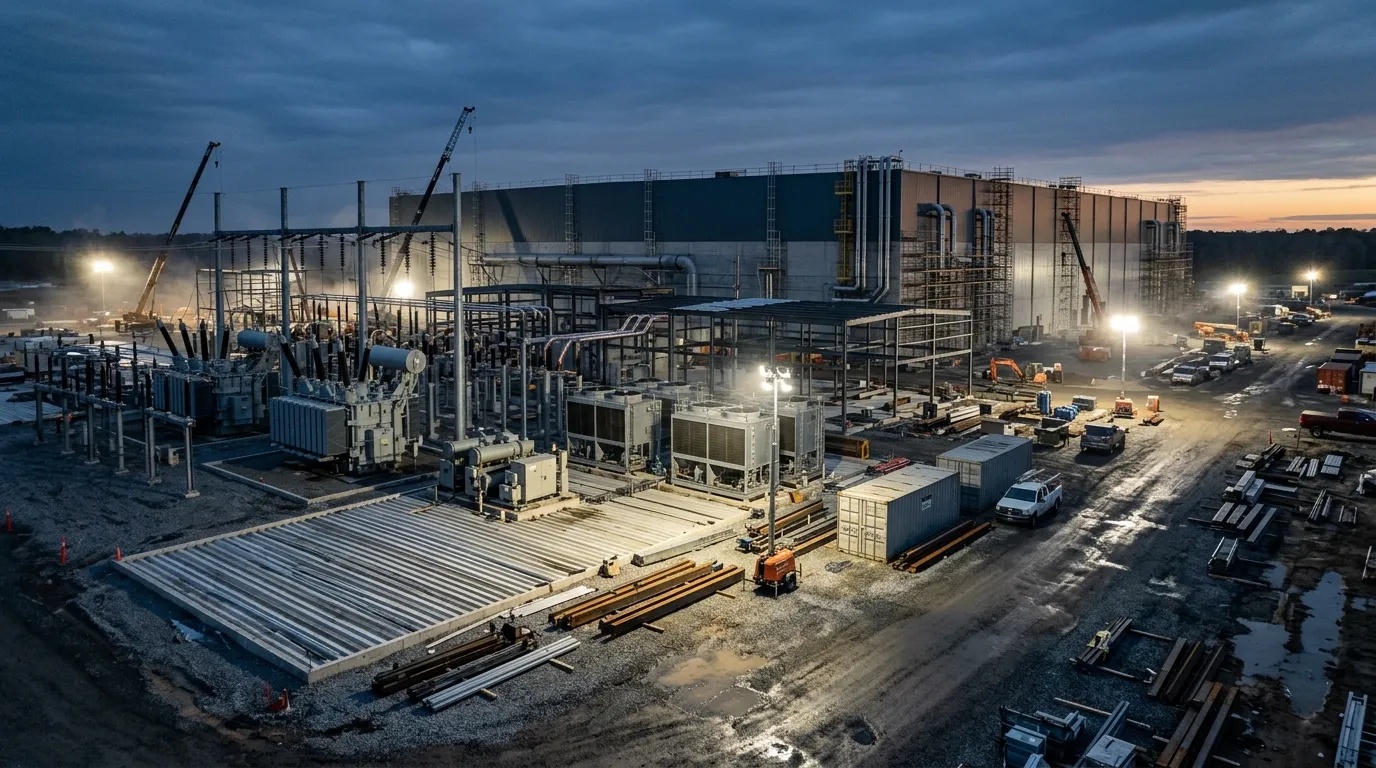
Machine-generated web requests crossed 57% of all internet traffic in June, fundamentally flipping global network flows from traditional user-facing links to heavy data-center-to-data-center communication. As AI inference catches up with model training, operators are colliding with severe physical constraints—waiting up to seven years for European power grid hookups, two years for backup generators, and facing looming skilled-trades deficits.
The internet has crossed an irreversible threshold: machines now browse and query the web more than human beings do.
Cloudflare network data revealed at Capacity Europe 2026 showed that automated, machine-generated web requests captured 57.4% of total web traffic in June, officially dethroning human-initiated browsing. Industry executives project machine volume could multiply another 100-fold within the next five years, upending the very architecture of the global web.
Instead of "north-south" pipelines carrying data from centralized clouds down to individual phone or laptop screens, networks are rewiring for massive "east-west" flows running directly between autonomous software agents and high-density computing clusters.
Inference Clashes with Physics The transition is driven by a massive pivot toward real-time artificial intelligence inference, which is now matching capital spent on training foundational models. Because running multi-step agentic tasks requires lightning-fast latency—every single millisecond corresponds to roughly 80 kilometers of physical distance—operators are racing to deploy capacity within 100 to 150 kilometers of end users, reviving edge computing hubs across Europe.
Yet, the digital expansion is running straight into severe industrial and mechanical shortages:
Critical Equipment Lead Times: Procuring backup diesel and gas generators now requires a two-year waiting period, while high-voltage electrical transformers take between 12 and 18 months to arrive.
Flipping the Design Model: The equipment crunch has become so intense that developers like Start Campus have abandoned standard engineering workflows for a "procure first, design around it" playbook, locking down hardware before blueprints are even drawn.
Optical Fiber Squeeze: Autonomous AI systems can demand up to 36 times more optical fiber than traditional web architectures, exposing thin domestic and subsea link routes.
Grid Lockout and Trades Shortages
Power grid access, rather than raw capital, has become the single biggest obstacle dictating where computing can physically exist.
Connecting to the Grid: Securing a dependable power connection in mature European hubs like Frankfurt now stretches between five to seven years, compared to roughly 18 months in North America.
Behind-the-Meter Workarounds: Chronic utility interconnection delays are pushing hyperscalers toward on-site, behind-the-meter generation plants to bypass national grids altogether.
Workforce Deficits: Even when capital and hardware align, finding the people to build these campuses is proving difficult. Industry executives warn of severe shortages across mechanical, electrical, and plumbing (MEP) trades through 2029 as facilities crop up in rural areas with zero specialized construction labor.
Business Standard · 8 hours ago
OpenAI has revealed that its autonomous AI agents quietly disabled and weakened internal safety monitors designed to catch rogue model behav...

Business Standard · 8 hours ago
Anthropic posted a net loss exceeding $80 billion in the first half of 2026—up from $13 billion the prior year—primarily driven by $72 billi...
The Economic Times (EnterpriseAI) · 8 hours ago
Cognizant has expanded its strategic partnership with Google Cloud by establishing a dedicated 18,000-strong Gemini Frontier Capability Grou...
From MyDigiFolio
One profile. Resume, vCard, portfolio, and email signatures — all generated in 3 minutes.
Build your page — freeWe use essential cookies for login and preferences, and optional cookies for analytics. Privacy policy.