BUSINESS
US Manufacturing Growth Continues in June as Factory Hiring Falls Sharply
MyDigiFolio Editors
2 min read
BUSINESS
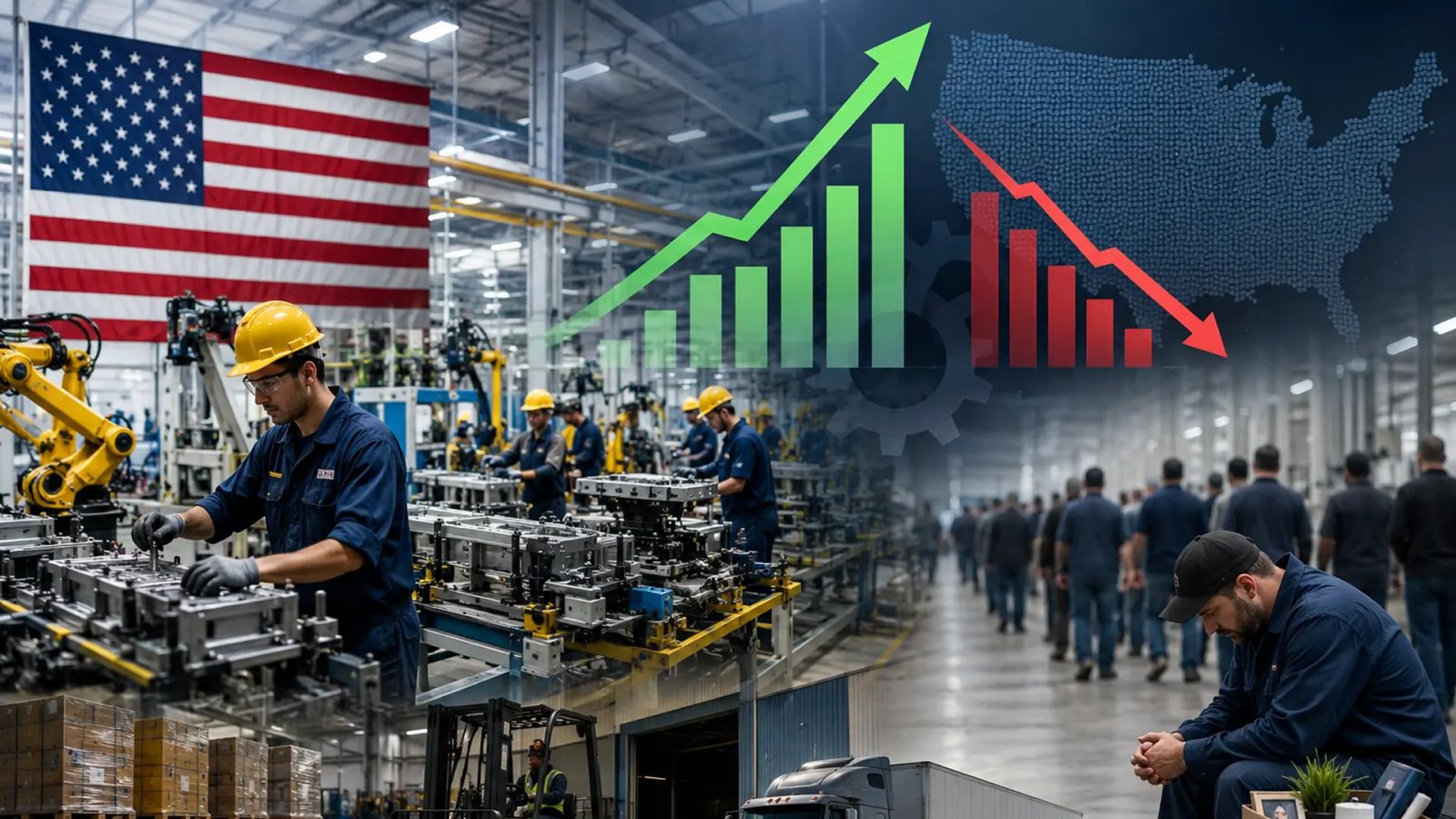
Manufacturers boosted orders and inventory levels to prepare for possible shortages and higher input costs linked to global supply chain pressures. Despite stronger production activity, businesses reduced factory payrolls as operating expenses and uncertainty around future demand weighed on hiring decisions.
Manufacturing Activity Strengthens
U.S. manufacturing activity improved again in June, supported by companies placing orders earlier than usual to reduce the risk of future shortages and higher prices. The flash manufacturing PMI rose to 55.7, its highest level since May 2022, compared with 55.1 in May.
The manufacturing sector has now recorded growth for four straight months, with businesses increasing purchases and rebuilding inventories to stay ahead of potential supply constraints.
Services Sector Also Improves
The services PMI increased to 51.3 from 50.7 in May, helping lift the composite output index, which tracks both manufacturing and services activity, to 52.2. Increased activity linked to the FIFA World Cup was cited as one factor supporting services demand.
Employment Weakens Despite Growth
While production and orders improved, factory hiring moved in the opposite direction. Manufacturing employment fell to 47.0, its lowest reading since May 2020.
According to S&P Global, companies reduced staffing levels due to concerns about future business conditions and rising operating costs, particularly higher raw material expenses.
Orders and Inventory Levels Rise
New factory orders climbed to their highest level in more than four years. Businesses also increased stock purchases, with inventory-building reaching its strongest pace in over a year.
Demand was supported by companies acting ahead of possible supply disruptions and expected price increases.
Supply Chains and Inflation Remain Concerns
Supplier delivery times lengthened during June, reflecting ongoing supply chain pressures. Although input cost growth eased compared with May, price levels remained elevated.
Manufacturers continued passing some of those higher costs on to customers, though the pace of price increases moderated.
Interest Rate Outlook
Persistent inflation pressures remain consistent with expectations that inflation could stay elevated for some time. The Federal Reserve kept interest rates unchanged at its latest meeting but signaled that additional rate increases remain possible this year as policymakers continue to monitor inflation trends.
The Hindu · 2 weeks ago
U.S. President Donald Trump has announced that Essar Group subsidiary Mesabi Metallics will invest $15 billion to build the largest steel mi...

Reuters · 3 weeks ago
US jobless claims remained near historically low levels in mid-September, suggesting the labor market has regained stability despite ongoing...

Reuters · 1 month ago
Adyen is planning further expansion and hiring in India as it targets the country's growing digital payments and cross-border commerce marke...
From MyDigiFolio
One profile. Resume, vCard, portfolio, and email signatures — all generated in 3 minutes.
Build your page — freeWe use essential cookies for login and preferences, and optional cookies for analytics. Privacy policy.