BUSINESS
US Manufacturing Growth Slows in June While Input Costs Stay High
MyDigiFolio Editors
2 min read
BUSINESS
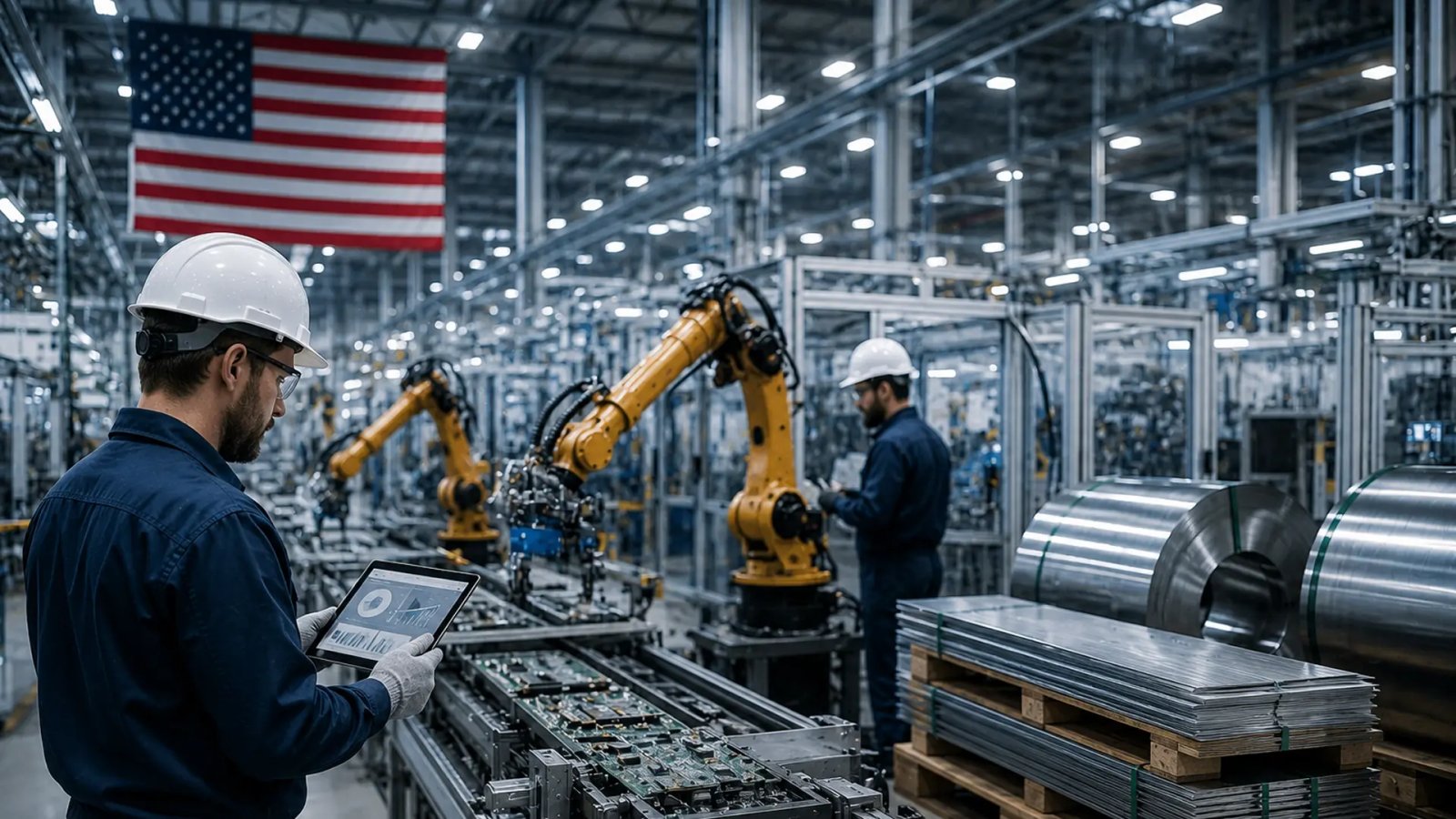
U.S. manufacturing remained in expansion territory for a sixth consecutive month, supported by ongoing AI-related investment. However, growth moderated in June as supply chain pressures eased, while elevated material costs and technology-sector workforce adjustments continued to shape the outlook.
U.S. manufacturing expanded for a sixth straight month in June, although the pace of growth eased after reaching a four-year high in May, according to the Institute for Supply Management (ISM).
The ISM Manufacturing PMI slipped to 53.3 in June from 54.0 in May. While the reading came in below economists' expectations, it remained above the 50-point mark that signals expansion in factory activity.
Analysts said the slowdown reflected a decline in advance ordering that had accelerated during the recent Middle East conflict, as businesses sought to avoid supply disruptions and higher costs. With a ceasefire now in place between the U.S. and Iran, supply chain pressures and energy prices have eased compared with earlier levels.
Investment related to artificial intelligence continued to support manufacturing demand. Fourteen industries reported growth during June, including machinery, electrical equipment, primary metals, textiles, and computer and electronic products.
The survey also showed that companies continued to face elevated input costs despite some moderation. Prices for materials such as aluminum, copper, electronic components, semiconductors, memory chips, and packaging remained high, while several of these products were still reported to be in short supply.
New orders remained strong, though slightly lower than in May. Factory inventories increased after an extended period of decline, while supplier delivery times improved. Export orders, however, moved lower during the month.
Employment conditions showed early signs of improvement. Around 64% of survey respondents said they were hiring, compared with 50% in May, even though the manufacturing employment index remained in contraction territory.
Separate labor market reports released on the same day indicated private-sector hiring increased by 98,000 jobs in June. Meanwhile, Challenger, Gray & Christmas reported that planned layoffs by U.S. employers fell 53% from the previous month to 45,849, although workforce reductions remained concentrated in the technology sector as companies continued adjusting staffing strategies around artificial intelligence.
Reuters · 2 weeks ago
The potential Workday deal highlights how AI is reshaping the value of traditional enterprise software. For HR technology, the development i...

Reuters · 2 weeks ago
A stable inflation reading could ease pressure on businesses facing higher borrowing costs. For employers, interest-rate expectations may in...

Reuters · 2 weeks ago
U.S. inflation remained relatively subdued in July, with lower gasoline prices helping limit the monthly increase in consumer prices. Howeve...
From MyDigiFolio
One profile. Resume, vCard, portfolio, and email signatures — all generated in 3 minutes.
Build your page — freeWe use essential cookies for login and preferences, and optional cookies for analytics. Privacy policy.