Every university student and recent graduate eventually runs into the same frustrating contradiction:
"You need experience to get an entry-level job, but you need an entry-level job to get experience."
Campus placement seasons, internship drives, and graduate scheme application windows are competitive. When hundreds of classmates are applying for the exact same twenty junior positions at top companies, submitting a basic resume that lists your degree, major, and a few club memberships is rarely enough to stand out.
At the same time, students frequently make the mistake of using heavily stylized graphic design templates from tools like Canva to make their applications look visually interesting. Unfortunately, this often backfires: corporate recruiting systems fail to parse the graphics, leading to automated rejections before anyone reads a single word.
Landing your first career placement does not require five years of professional experience. It requires understanding how early talent recruiters evaluate candidates and presenting your coursework, technical skills, and projects in a format designed for both automated hiring systems and human evaluators.
Here is the exact playbook to build a high-impact application presence from scratch.
1. Reframe Academic Work into Real-World Case Studies
The biggest mistake students make on their resumes is listing course titles—such as "Database Systems" or "Marketing Principles"—without explaining what they built or solved.
Recruiters do not evaluate you on the classes you attended; they evaluate you on what you created with that knowledge. You can turn your academic assignments into compelling experience by reframing them as project case studies:
Capstone & Thesis Projects: Treat your final-year capstone like a client engagement. Highlight the problem your team tackled, the tools or frameworks you selected, and the finished outcome.
Lab Work & Course Projects: If you wrote a compiler, built a financial valuation model, conducted user research, or created a marketing campaign for a class, treat it as an active project.
Hackathons & Competitions: Group hackathons, case competitions, and design sprints show teamwork, speed, and the ability to work under real deadlines.
Independent & Open-Source Work: Building a personal tool, contributing to an open-source repository, or writing industry analyses shows genuine passion that sets you apart from peers who only do the bare minimum for course credit.
Structure every project with three clear components: the problem you faced, the specific tools you used, and the measurable result or final deliverable.
2. Avoid the Fancy Template Trap on Campus Portals
Many students believe that an entry-level resume needs colorful progress bars, multi-column sidebars, and headshot photos to look modern.
In reality, mid-to-large companies that recruit on university campuses process thousands of applications through Applicant Tracking Systems (ATS) like Workday, Taleo, and Greenhouse. Multi-column graphic layouts and decorative shapes often scramble the parsing software, turning your education history and technical skills into corrupted code.
To ensure your application passes corporate screening:
Use a clean, single-column layout that reads top-to-bottom.
Put your Education and Technical Skills near the top of the page.
Avoid graphic rating bars (e.g., showing four out of five stars for Python tells software nothing; list your skills as clean text keywords instead).
Keep section titles standard: "Education," "Projects," "Experience," and "Technical Skills."
3. Why Every Student Needs an Online Portfolio URL
While a clean, text-based CV is required to clear automated company filters, the hiring manager who reviews your shortlist wants to see proof.
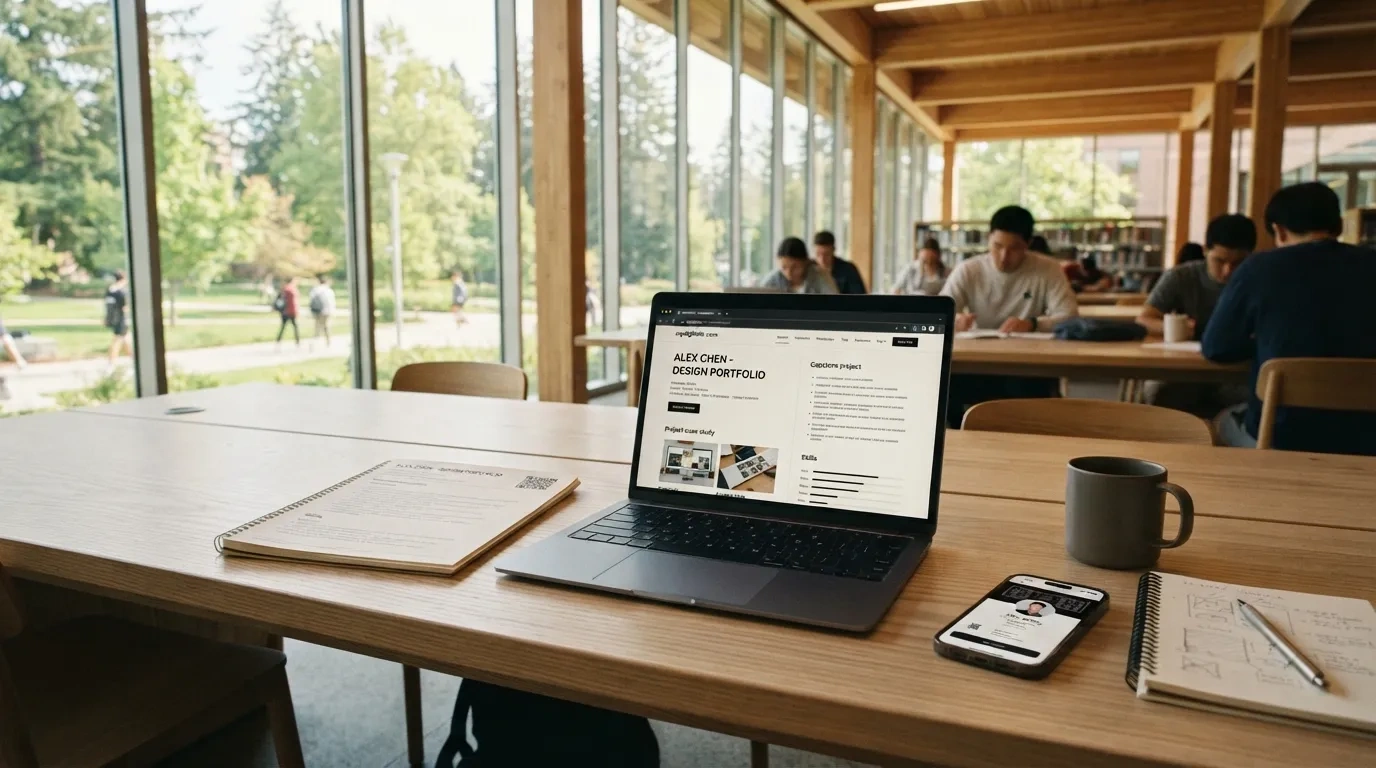
This is where early-career candidates can gain a massive advantage over the competition. Most students only submit a one-page document. By including a clean, clickable personal link—such as your own portfolio link—in your contact header, you give reviewers immediate access to:
Interactive Code & Live Demos: Working links to deployed web applications, GitHub repositories, or Figma prototypes.
Visual Documentation: Clear screenshots, diagrams, and project posters that cannot fit inside a standard one-page resume.
Process Explanations: Short descriptions of the challenges you ran into during development and how you solved them.
A live portfolio transforms an unverified claim on a page into undeniable proof of capability.
4. The Campus Career Fair Hack: Replace Paper Cards with a Digital vCard
Career fairs and on-campus recruitment events are noisy, fast-paced, and exhausting. Recruiters speak with dozens of students every hour, collecting thick stacks of identical paper resumes that often get shoved into briefcases and mixed up.
To create an instant, friction-free impression:
Set your personal vCard QR code as your smartphone lock screen.
When speaking with a campus recruiter or company representative, introduce yourself and let them scan your code with their phone camera.
Your verified phone number, email address, LinkedIn profile, and live portfolio link save directly into their smartphone contacts in three seconds.
By removing the friction of manual typing or lost paper sheets, you ensure that following up after the event is effortless for both sides.
5. How to Build Your Complete Student Presence for Free with MyDigiFolio
Students and recent graduates should not have to spend limited budgets on monthly website hosting fees or deal with deceptive resume builders that demand credit cards at the download screen.
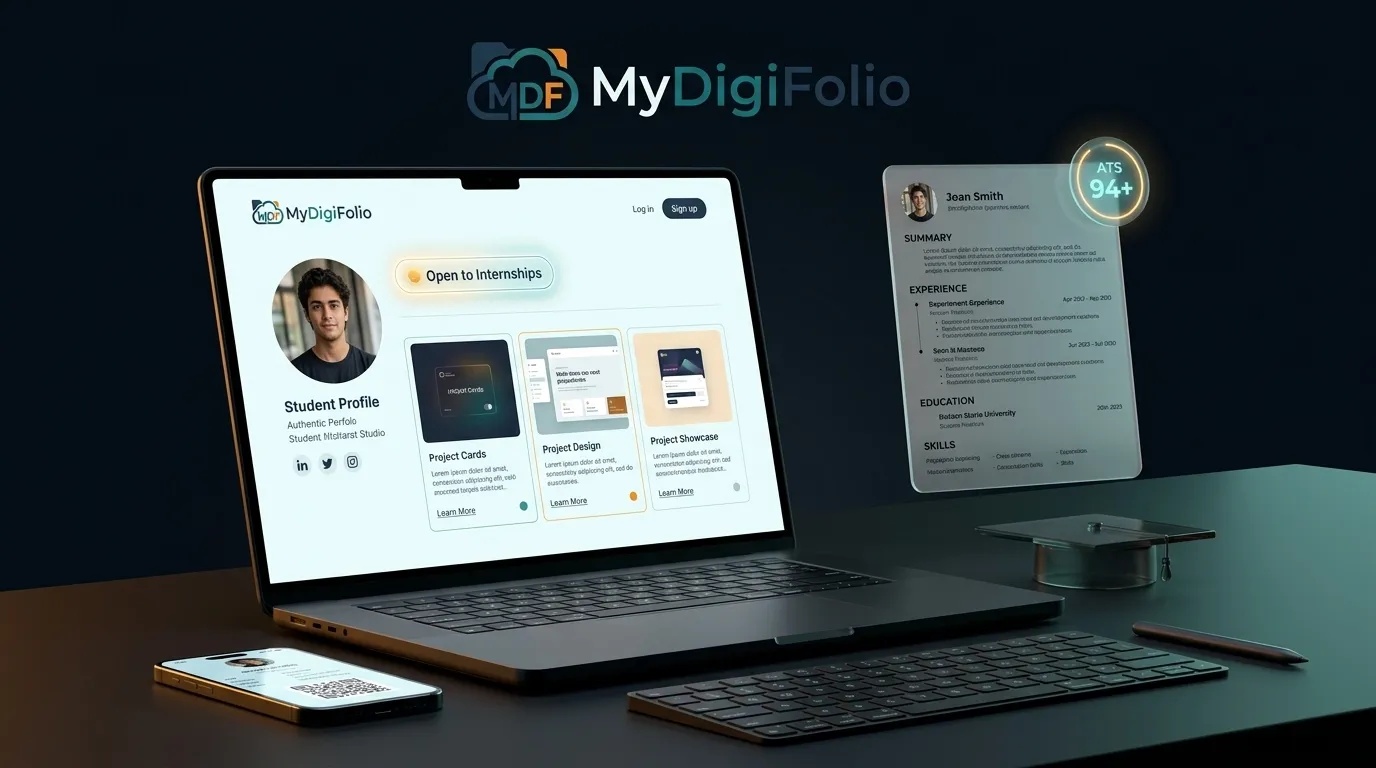
MyDigiFolio provides an all-in-one, completely free career engine designed specifically to help emerging professionals enter the workforce:
Free ATS-Compliant Resume: Generate clean, single-column PDF and Word (DOCX) resumes guaranteed to clear campus portal filters without formatting errors or watermarks.
Free Online Portfolio Website: Launch a fast, mobile-friendly project showcase at
[mydigifolio.com/yourname](https://mydigifolio.com/yourname)with zero coding, domain purchases, or hosting fees required.Free Digital vCard with QR Code: Keep a scannable contact badge on your phone to instantly share your portfolio and contact details at career fairs and meetups.
Free Formatted Email Signature: Add a professional HTML sign-off to your Gmail or Outlook account that directs hiring managers straight to your live work samples on every application follow-up.
When you finish a semester project or learn a new framework, update your dashboard once—and your resume, live portfolio, and digital card all update in real time.
Turn Your Potential into Tangible Proof
You do not need years of corporate experience to prove you are ready for a great internship or entry-level role. By pairing a machine-readable ATS resume with a live, interactive portfolio, you give campus recruiters both the structured facts they need and the proof of initiative they look for.
Launch your career toolkit in under 10 minutes, completely free.
👉