CAREERS
AI Skills Could Raise Pay Sharply, With India’s Entry-Level Salaries Potentially Doubling
MyDigiFolio Editors
3 min read
CAREERS

AI is reshaping jobs and creating higher pay opportunities for professionals who can apply the technology effectively. In India, the strongest salary advantages are emerging for workers who combine AI skills with domain expertise and business understanding.
Artificial intelligence is increasingly changing the way jobs are structured rather than simply replacing workers. As companies expand their use of AI, employees with relevant skills are seeing a growing pay advantage compared with similar roles that do not require AI capabilities.
According to PwC’s 2026 Global AI Jobs Barometer, the global wage premium for workers with AI-related skills has reached 62%, up from 57% in the previous report. The premium refers to the additional pay associated with roles requiring skills such as prompt engineering or machine learning.
The report also found that salary growth has been faster at companies more exposed to AI. AI is changing some roles by taking over repetitive activities and allowing professionals to focus on work requiring greater expertise and judgement. PwC describes these as “professionalised” roles, where average salaries have grown 42% faster than in roles requiring less specialised expertise.
In India, the wage advantage associated with AI skills is linked partly to the limited availability of skilled talent. According to Vamsi Karavadi, Partner at Deloitte India, the premium currently varies depending on the role and experience, with an estimated range of 20–40% and stronger premiums in digital-first organisations.
The strongest opportunities are currently seen in technology, data, engineering and analytics, while sectors such as BFSI, healthcare, manufacturing and retail are also increasingly applying AI to business operations. Employers are moving beyond simply looking for AI certifications and are placing greater importance on candidates who can use AI to improve efficiency and business outcomes.
AI applications are also becoming relevant across specific industries. In finance, professionals can apply AI to areas such as risk analytics, fraud detection and automated reporting. In manufacturing, applications include predictive maintenance and industrial automation.
Mid-career professionals are expected to see the strongest AI-related pay advantage in India because they can combine industry experience, business judgement and AI capabilities. At the entry level, graduates entering areas such as AI engineering, machine learning and data science can typically receive packages of around Rs 6–12 lakh per annum, with stronger candidates and premium employers potentially offering more.
This compares with approximately Rs 3–6 lakh per annum for entry-level roles without AI or digital skills, making the AI-focused starting packages roughly twice as high. Even when AI skills are only one component of a broader role, they can raise starting pay by around 15–20%, although the overall responsibilities of the position remain the main factor in determining compensation.
The shift is also increasing the importance of skills such as judgement, creativity, leadership and empathy. As AI becomes more integrated into different occupations, professionals who can use the technology effectively and demonstrate measurable business results are expected to benefit most from the emerging wage premium.
The Times of India · 6 days ago
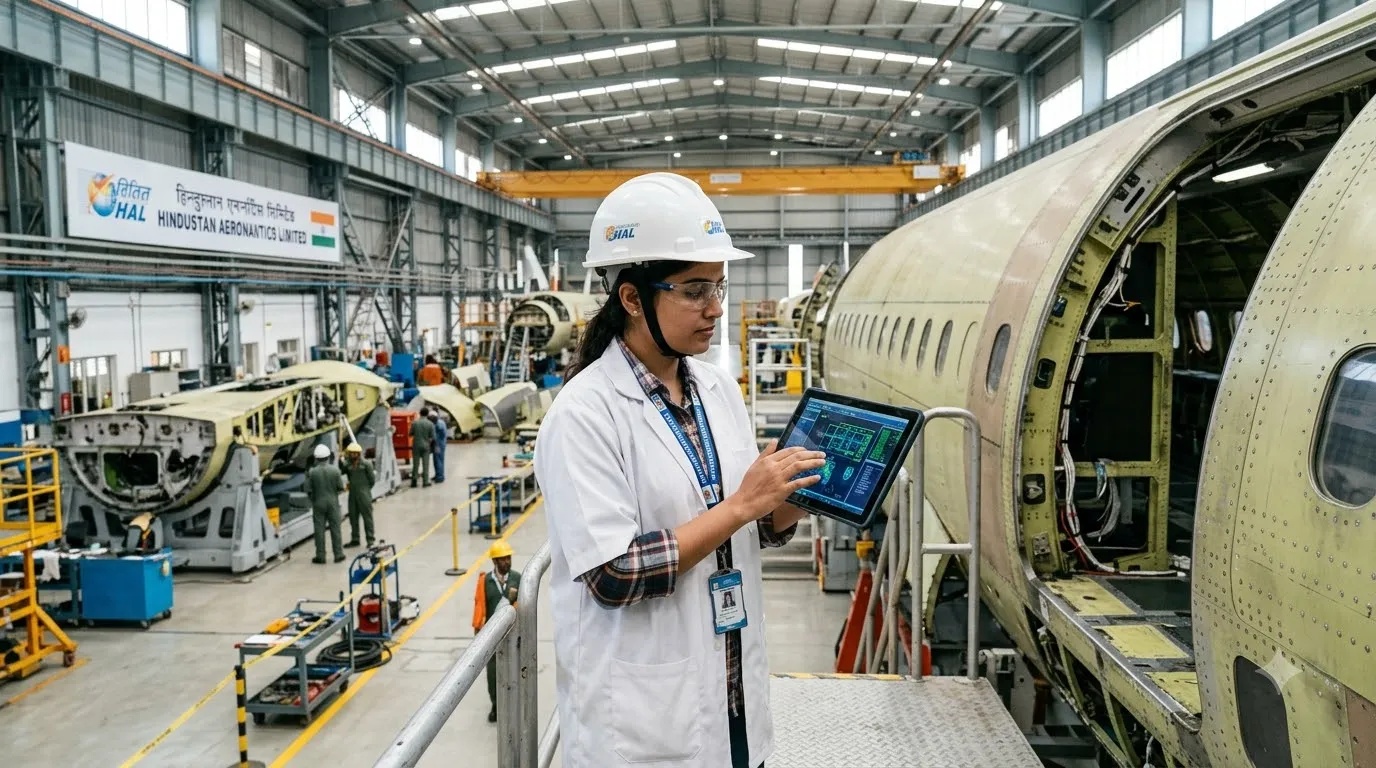
Hindustan Aeronautics Limited is concluding the application window for 150 Junior Executive (Grade E0) positions across nine engineering str...

The Times of India · 6 days ago
The Railway Recruitment Board has expanded Technician Grade-III positions from 6,234 to 7,002 across multiple railway zones, adding 768 tech...

The Economic Times · 1 week ago
ICICI Life Insurance plans to onboard 20,000 women financial advisors nationwide by the close of FY2027 under its flagship Narishakti initia...
From MyDigiFolio
One profile. Resume, vCard, portfolio, and email signatures — all generated in 3 minutes.
Build your page — freeWe use essential cookies for login and preferences, and optional cookies for analytics. Privacy policy.