TOP STORIES
Canada Faces Major Workforce Challenge as Arctic Infrastructure and Military Projects Expand
MyDigiFolio Editors
3 min read
TOP STORIES
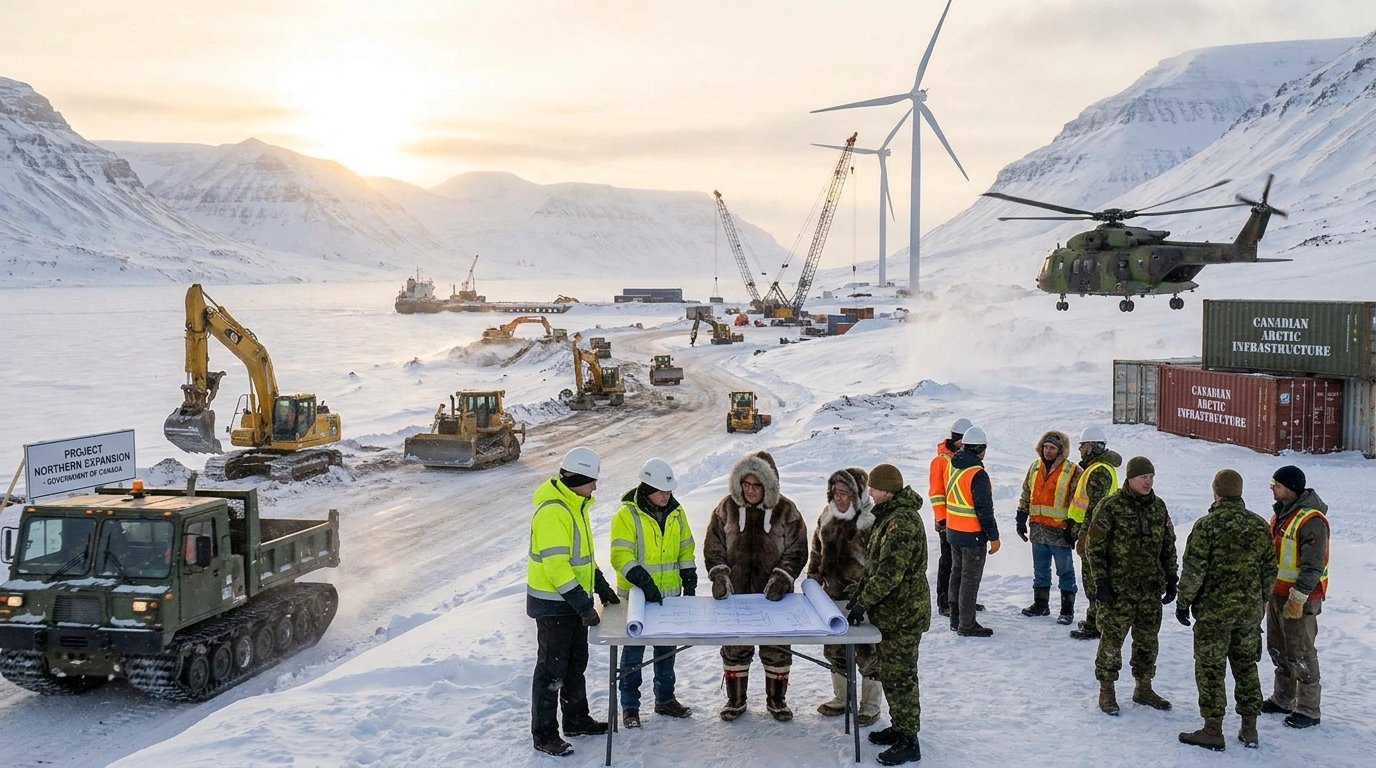
Canada’s ambitious Arctic infrastructure and military expansion plans are creating urgent demand for skilled workers across the North. Government leaders, Indigenous organizations, and industry experts say long-term workforce planning, Indigenous partnerships, and large-scale training programs will be essential to successfully deliver billions of dollars in northern projects while ensuring local communities benefit economically.
Canada’s Arctic Expansion Sparks Massive Workforce Demand
Canada is preparing for one of the country’s largest northern infrastructure and military expansion efforts, with billions of dollars planned for roads, ports, hydroelectric projects, airstrips, and defense facilities across the Arctic region.
Prime Minister Mark Carney recently announced more than $35 billion in military and infrastructure investments across:
The projects aim to strengthen Canada’s Arctic security presence while expanding transportation, energy, and economic development opportunities in remote northern regions.
Skilled Labor Shortages Emerging as Major Concern
Industry leaders warn the scale of planned construction work could overwhelm existing labor capacity in the sparsely populated North.
Experts say challenges include:
Executives involved in northern projects say workforce planning will become one of the most critical factors determining whether projects succeed.
Indigenous Partnerships Seen as Essential
Business leaders emphasized that Indigenous communities must play a central role in future Arctic development projects.
ATCO Ltd. subsidiary ATCO Frontec and several Inuit-led organizations are already participating in major northern infrastructure proposals.
Industry executives say many southern construction firms are underestimating:
Leaders stressed that northern development should generate lasting economic opportunities for Indigenous communities rather than relying solely on outside contractors.
Major Infrastructure Projects Under Review
Several major Arctic projects have already been referred to Canada’s federal major projects office for accelerated approval consideration.
Key proposals include:
Some projects are designed to support both military and civilian infrastructure while improving access to mineral exports and Arctic transportation routes.
Workforce Competition Intensifying Across the North
Experts warn that competition for skilled northern workers is already extremely intense.
Organizations competing for talent include:
Analysts say many projects may need to rely heavily on rotational fly-in, fly-out workers from southern Canada due to limited local labor availability.
Economic Opportunity and Long-Term Planning
Supporters of the projects argue that the investments could create major economic opportunities across northern Canada if workforce development is handled properly.
Potential benefits include:
Some northern leaders say workforce preparation should begin immediately so communities are ready once construction accelerates.
Military and Critical Minerals Strategy Expanding
The Arctic investments are also tied closely to Canada’s growing focus on:
Analysts believe northern infrastructure will become increasingly important as global competition over Arctic resources and trade routes intensifies.
Key Highlights

The Economic Times · 11 hours ago
ByteDance’s AI research unit, Seed, has established a dedicated Alignment & Preparedness team and launched an international search for speci...

The American Bazaar · 11 hours ago
Silicon Valley venture capital titan Andreessen Horowitz has eliminated most of its 34-member centralized "full stack talent" team, shifting...

The Economic Times (ET AI) · 11 hours ago
Zoho co-founder and chief scientist Sridhar Vembu has firmly rejected workforce cuts despite industry-wide SaaS contractions, committing ins...
From MyDigiFolio
One profile. Resume, vCard, portfolio, and email signatures — all generated in 3 minutes.
Build your page — freeWe use essential cookies for login and preferences, and optional cookies for analytics. Privacy policy.