AI & TECH
China’s Humanoid Makers Pivot from Agility to Embodied AI as Robot ‘Brain’ Race Pulls $13 Billion
MyDigiFolio Editors
3 min read
AI & TECH
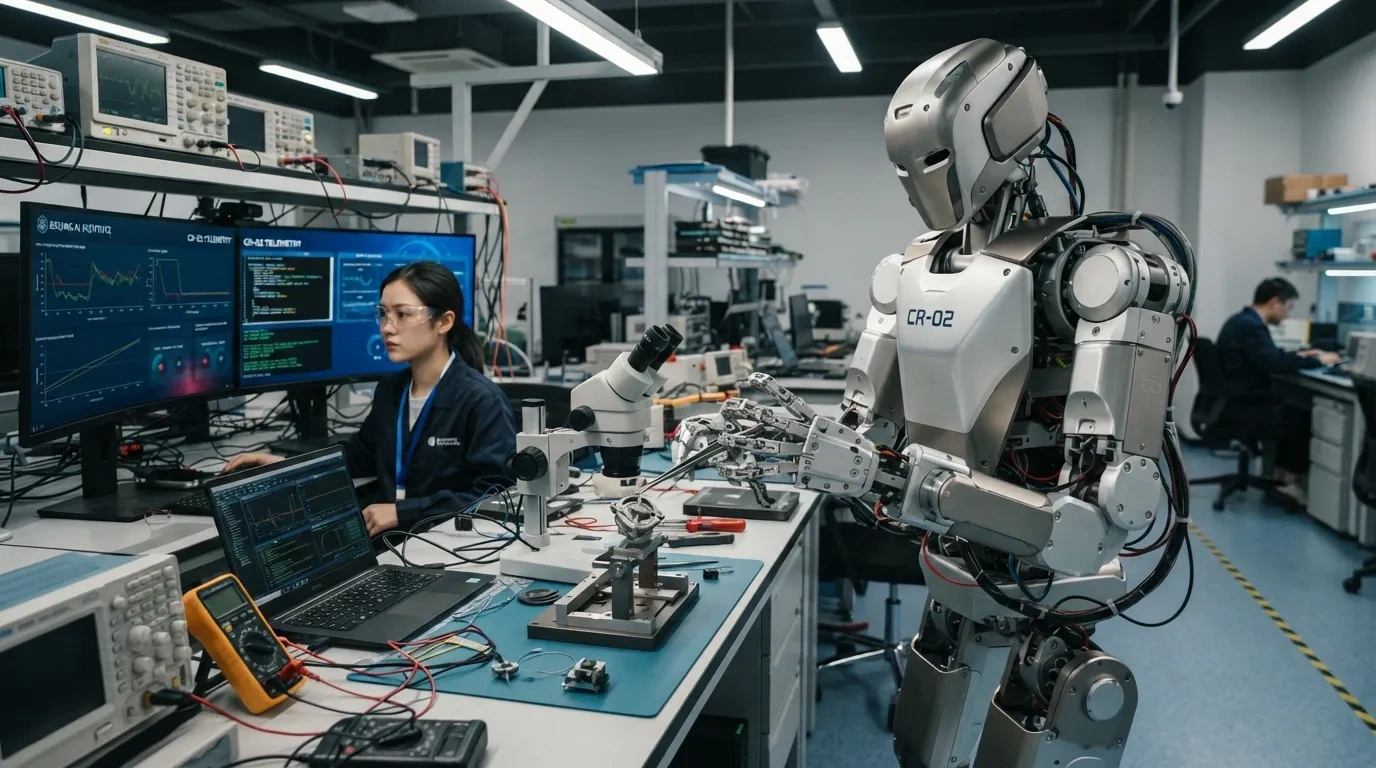
Having mastered acrobatics, backflips, and physical agility, Chinese humanoid robotics firms are shifting capital toward "embodied AI"—the cognitive software that allows robots to navigate unfamiliar environments and learn tasks autonomously. Chinese embodied AI developers secured 93.5 billion yuan ($13 billion) across 322 deals in the first half of 2026, a fivefold annual surge. As hardware commoditization erodes hardware margins, companies like X Square, Spirit AI, and Unitree are racing US rivals to unlock robotics' "ChatGPT moment."
After years of captivating audiences with humanoid robots performing backflips, synchronized dances, and high-speed running, Chinese robotics manufacturers are reallocating engineering capital toward their steepest technical challenge yet: developing embodied artificial intelligence that gives physical machines the reasoning capability to perform productive industrial and commercial labor.
According to data from market research firm ITjuzi, Chinese embodied AI developers secured 93.5 billion yuan ($13 billion) across 322 funding rounds in the first half of 2026—a fivefold increase compared to the prior-year period. The funding rush reflects an industry-wide consensus that as mass hardware manufacturing drives down actuator and frame costs, future profit margins will belong entirely to the operating system and cognitive software stack.
The US-China Embodied Intelligence Front The pivot has opened an intense front in technology rivalry between the United States and China:
The American Benchmark: US frontier labs—including Physical Intelligence, Skild AI, and Generalist—lead in foundational generalized reasoning, demonstrating software that acquires and reuses physical skills from brief visual demonstrations without requiring task-specific retraining.
The Chinese Advantage: Domestic startups—such as X Square, Galaxea, and Spirit AI, each commanding private valuations near $3 billion—are countering with close integration across China's manufacturing base, testing algorithms directly on active assembly lines and supply chains.
Executive Compensation Wars: Hong Kong-listed humanoid maker UBTech recently advertised a Chief Scientist role overseeing AI model architectures with a compensation package reaching up to 124 million yuan ($18 million), illustrating the scramble for rare neural-network architects.
"The margin won't come from the hardware but from the brain. The brain is indeed the weakest link in the complete robotics stack." — Dermot McGrath, Founder, ZenGen Labs
Physical Data Collection: Teleoperation vs. Simulation Unlike generative text models that ingest billions of web pages, embodied robots require complex multimodal data capturing physical dynamics, friction, and grip forces:
Human Teleoperation and Recording: Spirit AI has hired approximately 1,000 human workers to record daily domestic and industrial actions. ACE Robotics utilizes wearable motion sensors to log worker wrist torques and grip forces across retail outlets and hotel operations.
Large-Scale Multi-Config Datasets: Ant Group’s robotics division, Robbyant, trained its unified model across 160,000 hours of movement data, including 50,000 hours of human-guided interactions across 20 distinct robot configurations from 10 hardware brands.
Synthetic Simulation Engines: Conversely, DexForce relies on computer-generated virtual environments to train robots in physics engines, reporting that specific precision assembly workflows can be prepped for deployment within four to eight hours with 99.9% success benchmarks.
Chip Bottlenecks and the Coming 'ChatGPT Moment' Despite soaring domestic valuations, Chinese developers confront severe headwinds:
Silicon Export Curbs: Stricter US export controls on high-end Nvidia accelerators continue to limit large-scale physical foundation model pre-training. While domestic alternatives from Huawei and efficiency gains via synthetic data help, chip scarcity remains an acute bottleneck.
The GPT-7 Threshold: Unitree founder Wang Xingxing noted that early integration trials with OpenAI’s GPT-6 showed promising reasoning results on physical hardware, projecting that next-generation foundation models could trigger robotics' true "ChatGPT moment."
However, industry consultants caution that while proof-of-concept models may soon execute impressive demonstration videos across unfamiliar tasks, deploying dependable, zero-error autonomous humanoids on live client factory floors remains a multi-year engineering challenge.
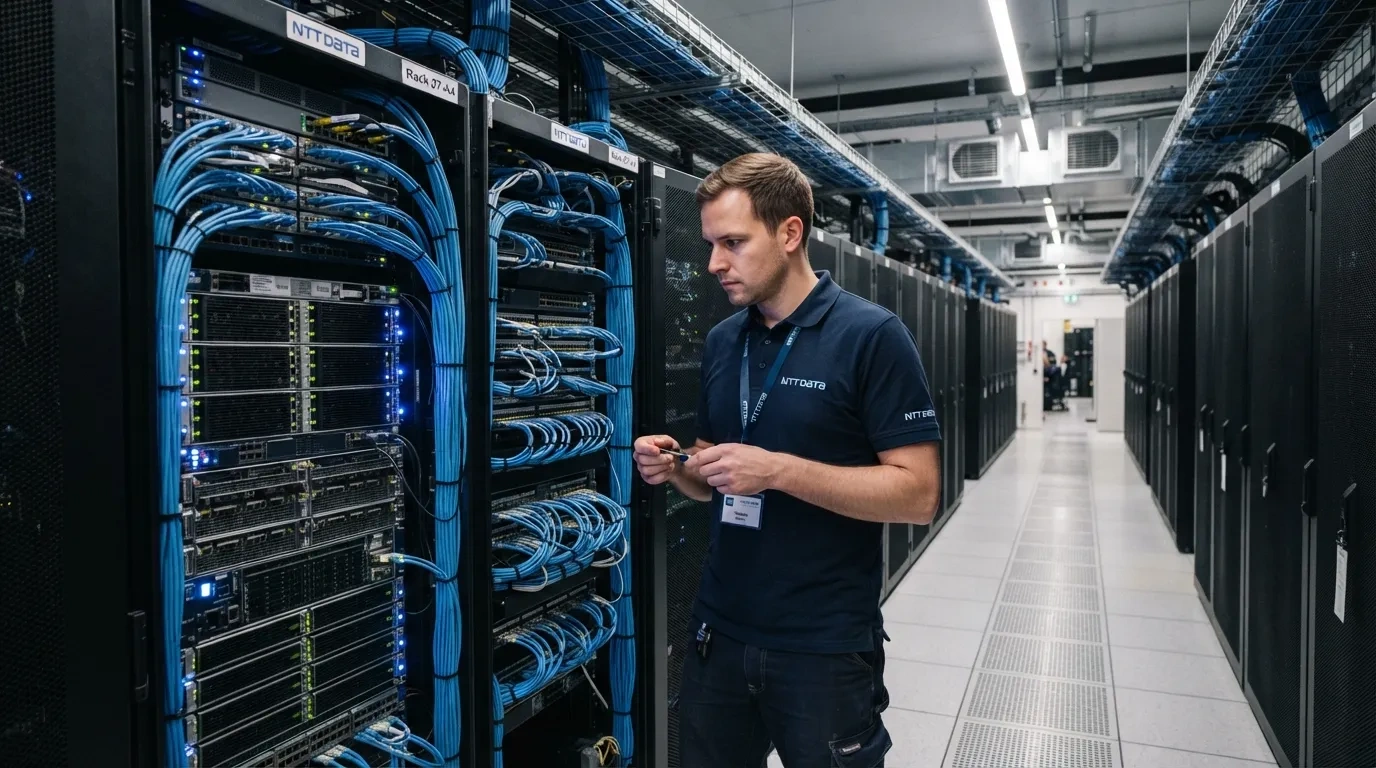
ETDataCenters (The Economic Times) · 1 day ago
NTT DATA has expanded its global AI Factory footprint to five locations, rolling out production-grade validation centers in Paris, Munich, a...

Business Standard · 1 day ago
The Ministry of Electronics and Information Technology (MeitY) has launched a comprehensive handbook on Data Empowerment and Protection Arch...
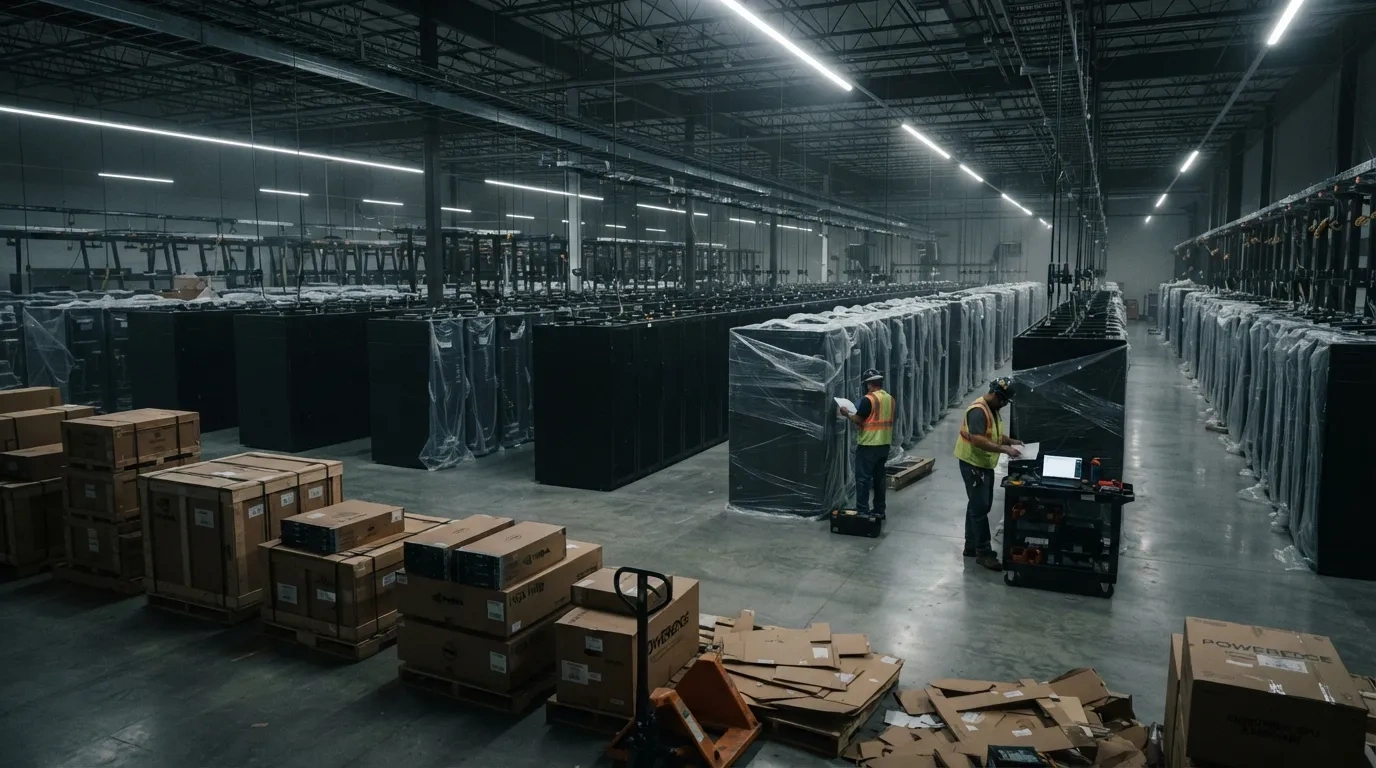
ETDataCenters (The Economic Times) · 1 day ago
Billions of dollars in high-end artificial intelligence processors are sitting idle in warehouses and unpowered facilities as utility grid b...
From MyDigiFolio
One profile. Resume, vCard, portfolio, and email signatures — all generated in 3 minutes.
Build your page — freeWe use essential cookies for login and preferences, and optional cookies for analytics. Privacy policy.