CAREERS
DBS HR Chief Urges Workers to Focus on How AI Can Help Them
MyDigiFolio Editors
3 min read
CAREERS

DBS is positioning AI as a workforce transformation tool while continuing to keep people involved in important decisions such as hiring and career development. The bank is also increasing hiring in key growth areas and creating pathways for employees to move into new roles.
DBS' human resources chief Lee Yan Hong believes artificial intelligence should be seen less as a threat to workers and more as a tool that can expand what people are able to do.
Looking back on more than 30 years in her career, Lee said previous crises, including the 2008 global financial crisis and the Covid-19 pandemic, presented greater challenges. In her view, AI represents a leadership and workforce transformation opportunity rather than a crisis.
She compared AI to an invention that helps people overcome cognitive limitations. AI can process large volumes of information, identify patterns and create summaries at a speed that humans cannot easily match. This, she said, can create more capacity for employees and businesses to focus on growth and higher-value work.
DBS has been pursuing digital transformation since 2014 and expanded its focus on generative AI in 2023. The bank introduced tools such as its internal DBS GPT platform and Microsoft Copilot to employees across its 19 markets instead of waiting for staff to adopt the technology independently.
More than 70% of DBS employees now use AI tools, according to Lee, with more than 1.8 million prompts generated each month across the bank's markets. DBS has invested millions of dollars in technology and AI subscriptions to support this adoption.
Lee said reducing repetitive and time-consuming tasks can help employees complete their work more efficiently and free up time for rest, reflection and more creative thinking.
AI is also being used within the bank's HR function. Lee said that reviewing information for senior executive performance assessments previously took about eight hours. AI can now prepare an initial version in around five minutes, allowing more time for human consideration before final decisions are made.
DBS also uses AI in recruitment, particularly when dealing with very large numbers of applications. Lee said a single job opening in India can receive between 10,000 and 100,000 applications. AI helps the bank screen candidates using more consistent, skills-based criteria, but the hiring process is not handed over entirely to technology.
Candidates still go through assessments, while interviews remain important for evaluating suitability and helping candidates understand the organisation's culture and values.
The bank permits the use of generative AI in certain writing and coding assessments. However, Lee said candidates still need to demonstrate deeper thinking and the ability to connect information and develop strong solutions.
DBS is also increasing opportunities for young talent in 2026. The bank plans to bring in more than 500 graduates through its management associate, internship and traineeship programmes. It had hired 112 management associates so far in 2026, more than twice the average annual intake recorded in 2024 and 2025.
Hiring is also expected to grow in areas including AI, data, wealth management, risk management and cybersecurity. New hires in Singapore were up about 10% in 2026 compared with the same period in 2025, according to Lee.
At the same time, DBS is encouraging internal mobility for employees whose roles may change. Workers can move into new positions after gaining the required skills or licences, including roles in relationship management and areas supporting the bank's expanding wealth management business.
On August 24, DBS launched a new career advisory service during its Live Fulfilled Festival. More than 100 members of its 500-person HR team were trained as career advisers to help employees navigate career changes and expand their responsibilities.
The bank also signed a memorandum of understanding with the Institute of Banking and Finance to develop AI capabilities, support workers moving into redesigned jobs and strengthen the pipeline of young talent entering the financial sector.
For Lee, reducing fear around AI is an important part of preparing employees for the changes ahead. She believes workers should focus on learning how to use AI and asking better questions rather than worrying only about what the technology may do to their jobs.

India Today · 11 hours ago
India’s high-frequency trading industry is offering unusually high compensation, including internships worth up to Rs 60 lakh for two months...
Reuters · 11 hours ago
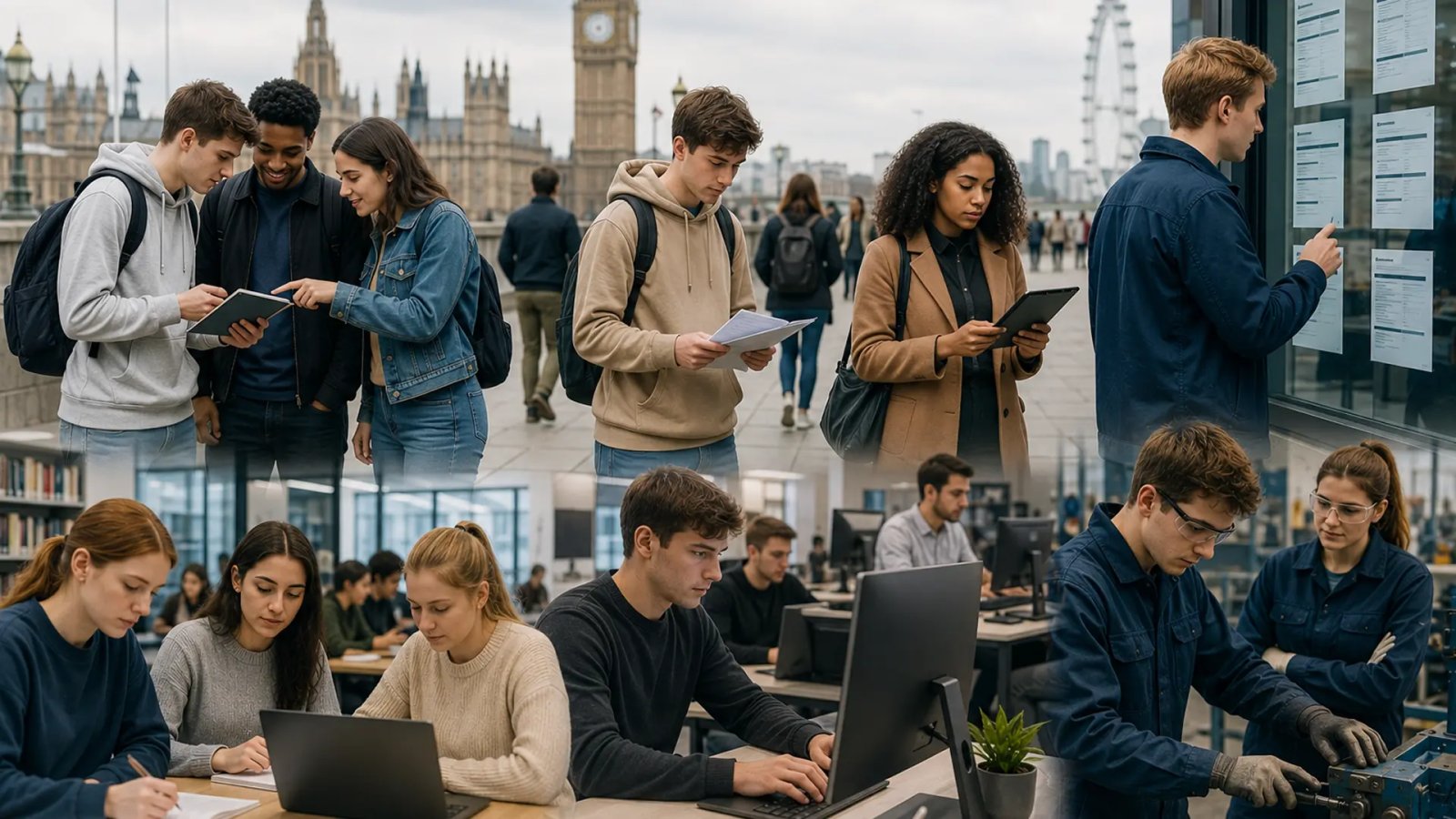
The number of UK 16-24 year-olds classified as NEET fell to 981,000 in the second quarter of 2026 from 1.011 million in the previous quarter...
Business Standard · 11 hours ago
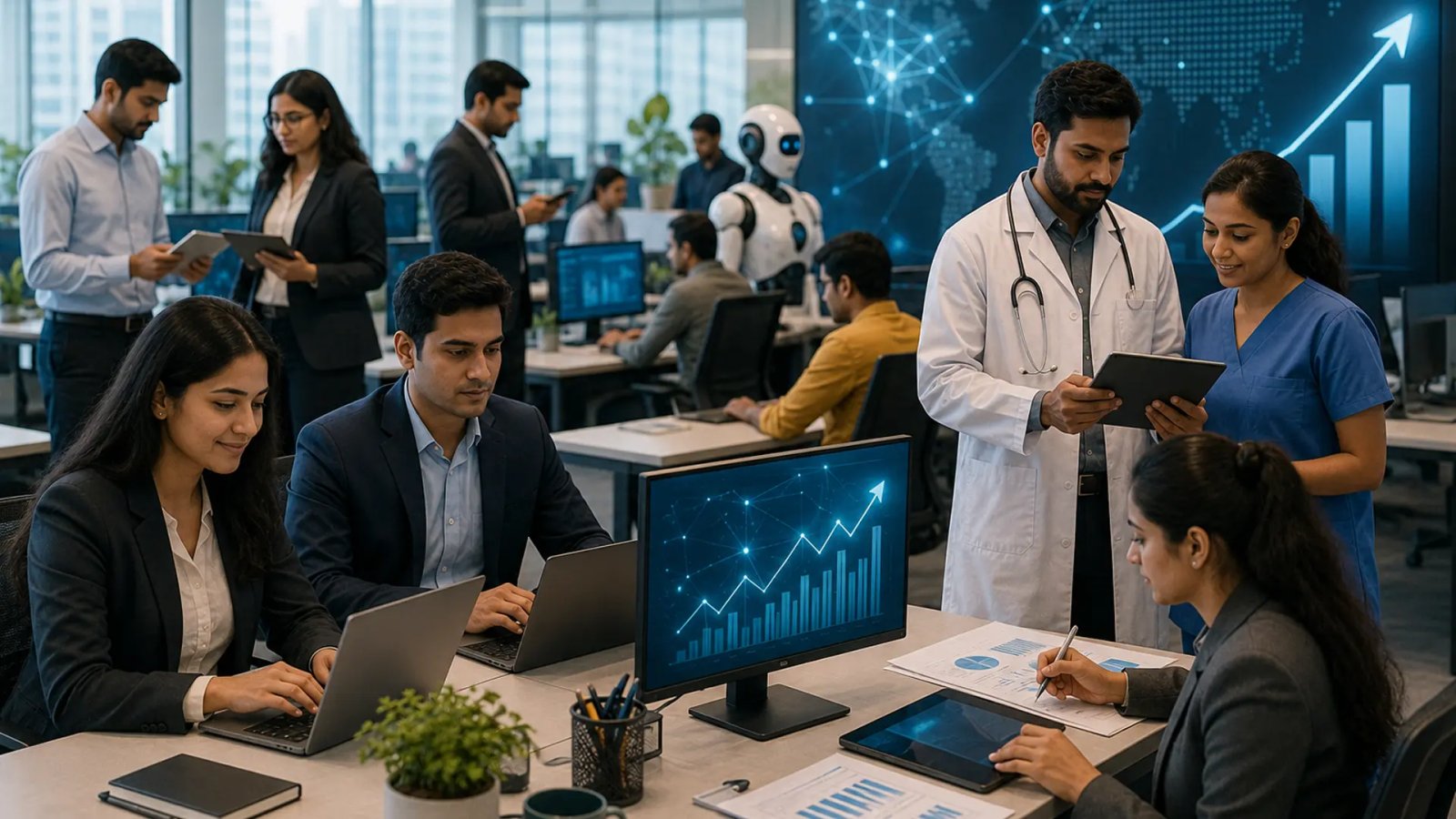
India’s formal job market returned to growth in July after three months of decline, with job postings remaining well above pre-pandemic leve...
From MyDigiFolio
One profile. Resume, vCard, portfolio, and email signatures — all generated in 3 minutes.
Build your page — freeWe use essential cookies for login and preferences, and optional cookies for analytics. Privacy policy.