CAREERS
Festive Hiring Surge Triggers Verification Crisis as Gig Worker Discrepancies Top White-Collar Rates
MyDigiFolio Editors
3 min read
CAREERS
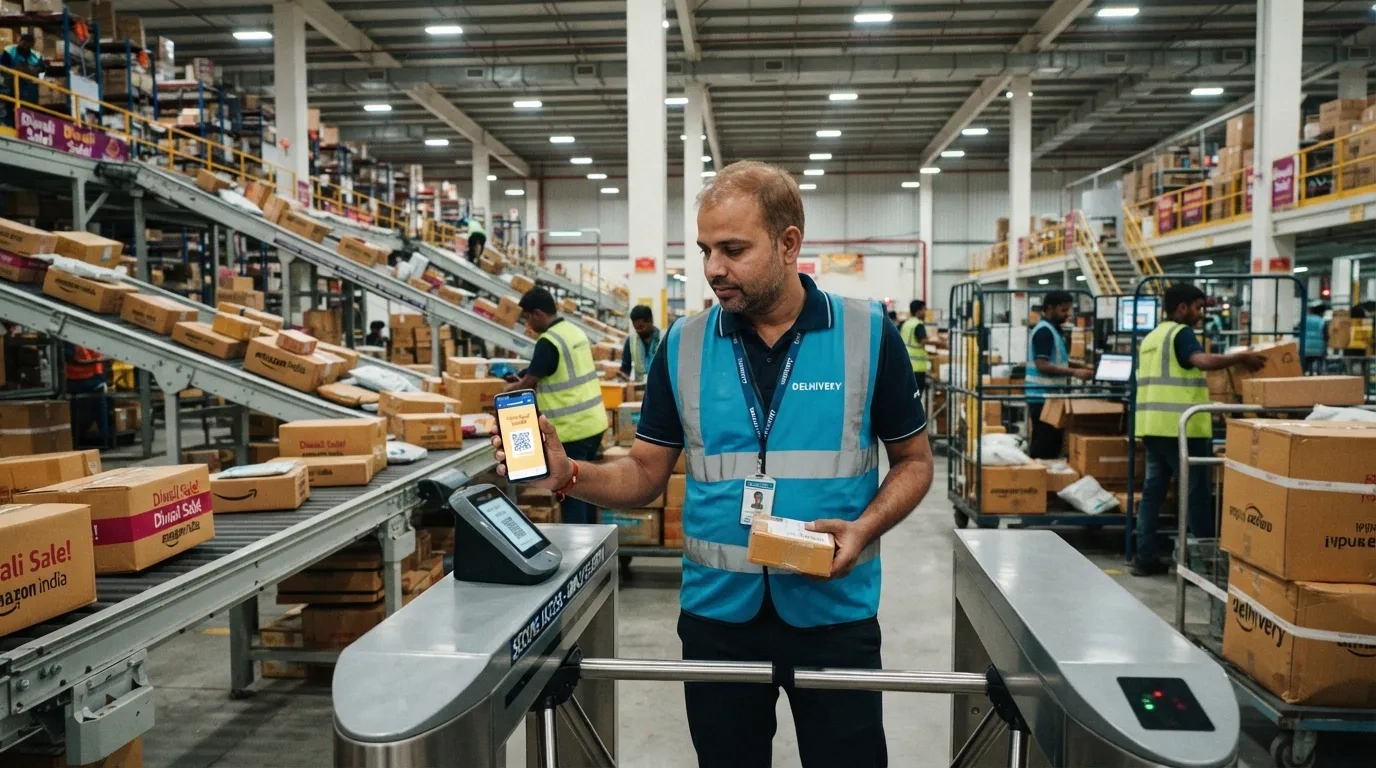
As India's festive season accelerates hiring across e-commerce, quick commerce, and logistics, employers face an alarming verification bottleneck. Data from background verification firm AuthBridge shows 5.61% of gig worker profiles exhibited discrepancies in H1 FY26, outpacing the 4.33% rate in white-collar roles. With quick commerce demand surging 18% and hiring expanding into Tier-II and Tier-III cities, the risk has shifted from simple résumé padding to complex identity substitution, proxy candidates, and duplicate documentation.
India’s annual festival shopping rush has created an operational paradox for supply chain and retail employers: the imperative to deploy thousands of delivery and warehouse workers overnight is colliding directly with the technical difficulty of verifying who is actually reporting for work.
According to the Workforce Fraud Files report from background verification firm AuthBridge, 5.61% of gig-worker profiles displayed verification discrepancies during the first half of FY2026—surpassing the 4.33% discrepancy rate recorded among white-collar candidates. Within the gig segment, address inconsistencies accounted for 9.70% of profiles, identity discrepancies reached 2.53%, and court/criminal record flags stood at 2.23%.
Scale and Regional Dispersion: Tier-II and Tier-III Boom The verification strain has intensified as consumer platforms expand deeper into non-metro talent basins:
Sectoral Hiring Growth: Data from foundit’s October 2026 Tracker recorded 127,080 festive-related jobs (+7% YoY), led by quick commerce at 18% growth, white-collar gig roles at 15%, core e-commerce at 12%, and logistics at 10%.
Geographic Shift: Seasonal demand surged beyond traditional metros, with Tier-II cities recording 11% growth and Tier-III markets expanding by 15%, requiring decentralized, app-based onboarding workflows that verify workers remotely.
The Structural Deficit: AuthBridge founder and CEO Ajay Trehan highlighted that despite digital onboarding tools, gaps in fundamental verification—such as address histories and employment records—remain an ongoing structural vulnerability rather than isolated paperwork errors.
"The H1 FY26 Workforce Fraud Files clearly show that hiring-related discrepancies remain a persistent and structural challenge. Despite faster and more digitised hiring workflows, we continue to see gaps in fundamental checks such as employment history, address, and education." — Ajay Trehan, Founder & CEO, AuthBridge
From Forged Papers to Identity Substitution Forensic experts point to a fundamental shift in the mechanics of recruitment fraud:
Proxy Candidates and Identity Swapping: Amit Rahane, Partner at EY Forensic and Integrity Services, warned that simple CV inflation has given way to identity substitution—scenarios where one individual applies, interviews, and passes digital verification, but an entirely different person arrives to perform on-ground shifts.
Algorithmic Cross-Checking: EY’s automated verification engines have flagged over 100,000 duplicate credentials and 20,000 suspiciously similar documents, illustrating that evaluating candidate documents in isolation fails to catch organized credential rings.
Prevalence Across Sectors: Research from YouGov and HireRight found that 74% of surveyed Indian HR leaders uncovered identity fraud in 2025—the highest rate among all international markets surveyed.
Balancing Rapid Onboarding Against Operational Risk With NITI Aayog projecting India’s gig economy to expand from 1 crore workers to 2.35 crore by 2029–30, enterprise HR leaders are revamping onboarding protocols:
Risk-Tiered Onboarding: Platforms such as B2B e-commerce network ElasticRun are integrating identity verification directly into mobile worker apps, tiering scrutiny based on job sensitivity rather than relying on one-off manual paper reviews.
Smart Verification vs. Slower Deployment: Forensic specialists advise moving fraud detection earlier in the funnel using automated facial matching and database cross-referencing, reserving human investigation for genuine anomalies rather than slowing down entire fulfillment centers.
As peak seasonal demand tests logistics networks, industry leaders caution that speed cannot supersede security, noting that investigating on-ground misconduct or data breaches after deployment carries far higher financial and brand costs than upfront verification.
ETHRWorld (The Economic Times) · 10 hours ago
While India's headline unemployment sits near 5%, nearly two in five (39.3%) college-educated youth aged 15–24 in the labour force remain jo...

ETHRWorld (The Economic Times) · 4 days ago
India’s financial crime compliance workforce is projected to expand to 45,000 by 2030, generating over 19,000 specialised jobs as global fin...

ETHRWorld (The Economic Times) · 4 days ago
As enterprises like Microsoft, Barclays, and Kroger slash headcounts citing artificial intelligence, an epilogue is taking shape: the "AI bo...
From MyDigiFolio
One profile. Resume, vCard, portfolio, and email signatures — all generated in 3 minutes.
Build your page — freeWe use essential cookies for login and preferences, and optional cookies for analytics. Privacy policy.