CAREERS
India’s Headline 5% Unemployment Masks Crisis as Educated Youth Joblessness Hits 39%: Ashoka Report
MyDigiFolio Editors
3 min read
CAREERS
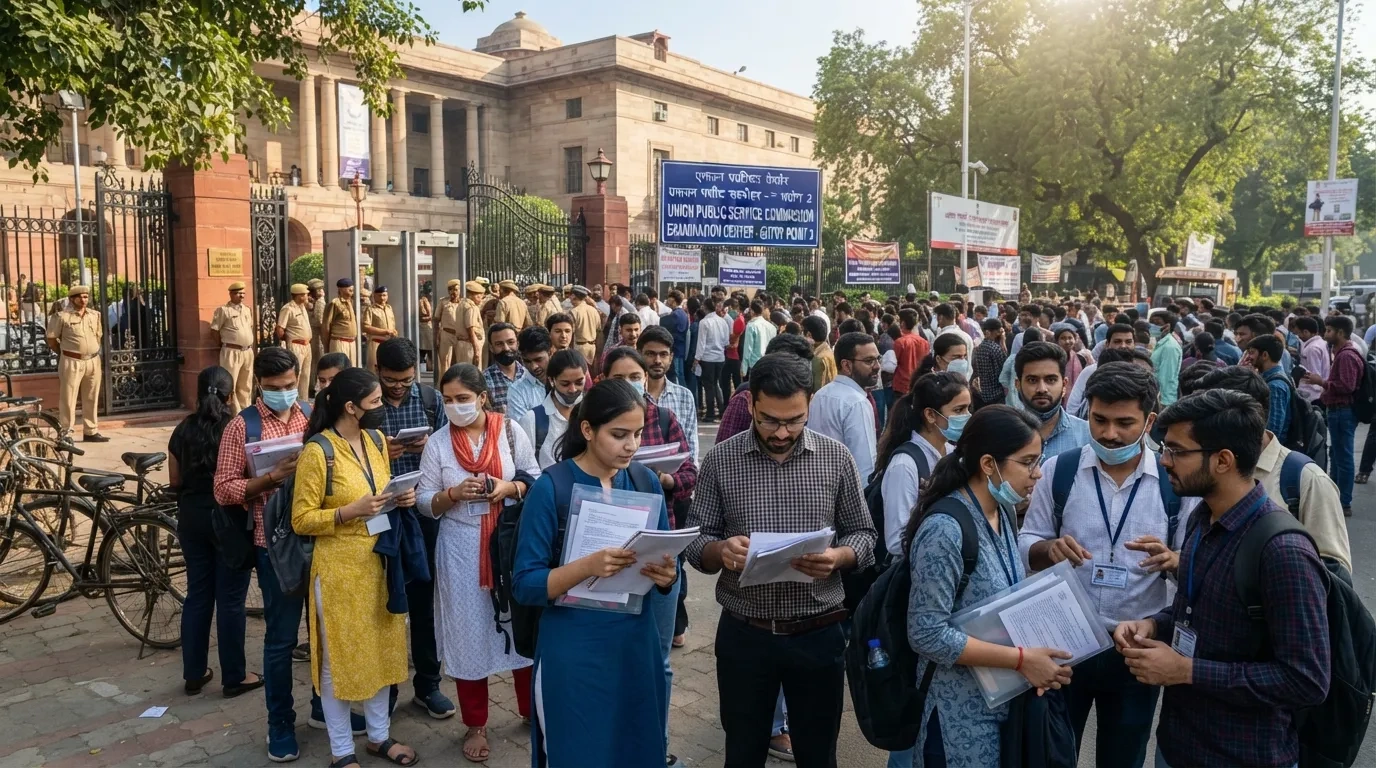
While India's headline unemployment sits near 5%, nearly two in five (39.3%) college-educated youth aged 15–24 in the labour force remain jobless. Research from Ashoka University’s Isaac Centre for Public Policy shows structural economic transformation has stalled: agriculture absorbed over 4 crore of the 10.4 crore workers added between 2018–19 and 2025, while manufacturing stayed stagnant at 13–14%. With informal self-employment masking underemployment and middle-skill jobs disappearing, educated youth face an acute security deficit.
From coaching hubs in Patna and Pune to street demonstrations in New Delhi, widespread youth unrest over exam paper leaks, postponed recruitments, and government hiring freezes points to a structural economic contradiction.
While India's aggregate unemployment rate remains modest at approximately 5%, the headline metric masks a severe crisis of job quality and youth absorption. According to an analysis by Ashoka University’s Isaac Centre for Public Policy, 39.3% of college-educated youth aged 15 to 24 in the labour force are unemployed. Because impoverished workers cannot afford to remain idle, low overall unemployment simply reflects forced entry into low-productivity subsistence work, while educated youth queue for stable employment.
Reverse Structural Transformation: Back to the Farm Traditional economic development relies on moving surplus agrarian labour into productive industrial shop floors. In India, that shift has stalled:
Agrarian Absorption: While the employment rate for 15–59-year-olds climbed from 47.1% in 2018–19 to 56% in 2024–25, Periodic Labour Force Survey (PLFS) data shows agriculture's share of employment actually rose from 38% to 39%.
4 Crore Farm Additions: Agriculture absorbed over 4 crore of the roughly 10.4 crore workers added between 2018–19 and 2025.
The Missing Factory Floor: Manufacturing has failed to provide an escape valve, remaining flat at 13% to 14% of total employment. Outside agriculture, services added 3.3 crore workers, industry added 1.6 crore, and construction took in 1.2 crore. By comparison, China's transformation reduced agricultural employment to roughly 22% by combining export-oriented manufacturing and infrastructure.
"India is trying to move out of farming without the factory floor that carried other Asian economies... Low headline unemployment therefore masks a deeper deficit in the quality, security and productivity of the jobs on offer." — Isaac Centre for Public Policy, Ashoka University
Self-Employment Masks Precarious Underemployment Of the 6.2 crore non-farm jobs created over the period, fewer than half were salaried positions:
The Salaried Minority: Only 2.9 crore jobs were salaried, while 2.4 crore were categorized as self-employed and 1 crore consisted of casual daily wage labour.
Lack of Formal Safety Nets: Even salaried roles frequently lack written contracts, paid leave, or social security. International Labour Organization (ILO) data indicates that only 16% of Indian workers have formal employment contracts, compared to roughly 50% in China and 40% in Indonesia.
The Earnings Gap: Non-farm self-employed individuals—frequently running roadside stalls or home enterprises—earned an average of ₹18,871 per month in 2025, trailing regular salaried workers who averaged ₹23,088.
The Hollowing Out of Middle-Skill Jobs The demand profile for wage work is polarizing into a barbell structure:
Disappearing Rungs: Employment growth is concentrated in low-skill roles at the bottom, with modest growth at the top and stagnation in the middle. This hollowing out removes critical ladder positions—such as technicians, clerks, and operational supervisors—traditionally used by families to achieve upward economic mobility.
High-Skill Vulnerability: At the higher end, white-collar entry-level roles face disruption from generative AI and automation, compounding career uncertainty.
Rebalancing India's labor market will require lifting regulatory friction for small and medium enterprises, expanding credit to labor-intensive exporters in apparel and food processing, and aligning vocational curriculums with industrial demand to close the gap between educational credentials and economic security.
ETHRWorld (The Economic Times) · 10 hours ago
As India's festive season accelerates hiring across e-commerce, quick commerce, and logistics, employers face an alarming verification bottl...

ETHRWorld (The Economic Times) · 4 days ago
India’s financial crime compliance workforce is projected to expand to 45,000 by 2030, generating over 19,000 specialised jobs as global fin...

ETHRWorld (The Economic Times) · 4 days ago
As enterprises like Microsoft, Barclays, and Kroger slash headcounts citing artificial intelligence, an epilogue is taking shape: the "AI bo...
From MyDigiFolio
One profile. Resume, vCard, portfolio, and email signatures — all generated in 3 minutes.
Build your page — freeWe use essential cookies for login and preferences, and optional cookies for analytics. Privacy policy.