TOP STORIES
India GCC Tech Hiring Dips 3.5% in Q2 FY27 as Global Firms Pivot to Outcomes Over Headcount: Quess Report
MyDigiFolio Editors
3 min read
TOP STORIES
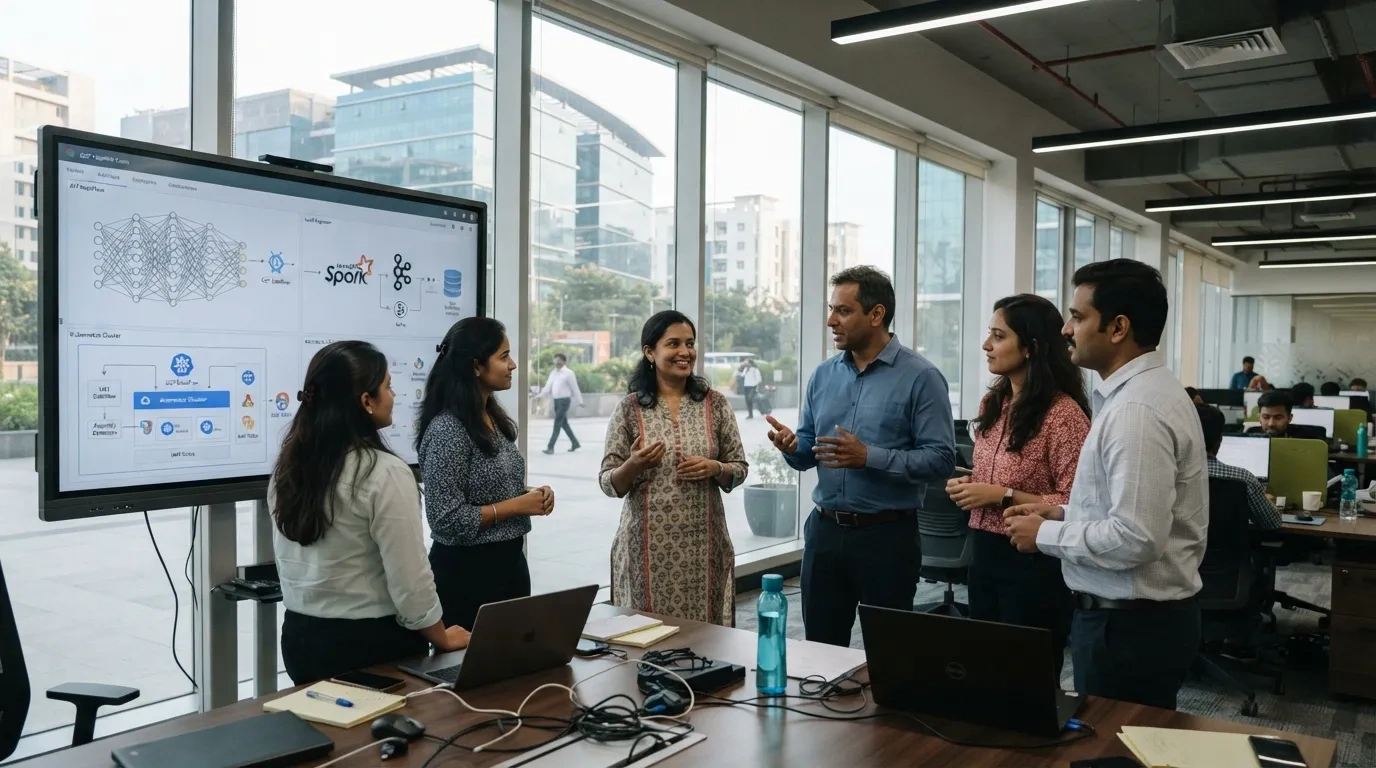
Technology recruitment across India's Global Capability Centres (GCCs) fell 3.5% sequentially in Q2 FY27 as multinational parent firms shifted from raw capacity expansion to selective, outcome-driven hiring, according to staffing leader Quess Corp. While legacy software engineering requisitions dropped 11% and telecom fell 24%, specialized demand for AI, data analytics, and cybersecurity professionals jumped, now driving over 30% of total GCC tech hiring. Simultaneously, Tier-II cities like Coimbatore surged 13% as captive networks adopted distributed hub-and-spoke models.
After quarters of rapid headcount additions, multinational Global Capability Centres (GCCs) in India entered a strategic recalibration phase during the July–September quarter of FY27. According to the India GCC Tech Talent Landscape Q2 FY27 report released by staffing firm Quess Corp, overall tech hiring demand contracted by 3.5% quarter-on-quarter (Q-o-Q).
The modest sequential contraction signals an operational pivot: international parent enterprises are no longer treating their Indian captive centers merely as low-cost support extensions. Instead, global leadership is mandating that India centers take ownership of business outcomes, product architecture, and operational resilience, aligning hiring targets strictly to high-value capabilities.
The Sectoral & Functional Contraction The overall 3.5% decline reflects disciplined cuts across legacy software and operational disciplines:
Steep Drops in Legacy Roles: Software and digital engineering roles saw an 11% fall in demand, while IT service management and digital operations dropped 10%.
Sectoral Reductions: The telecom and networks sector experienced the steepest decline at 24%, followed by manufacturing and industrial (the largest GCC segment by overall share) falling 9%, and BFSI dipping 8%. Professional services and consulting edged down 2%.
Resilient Consumer Demand: Bucking the slowdown, retail and consumer GCCs expanded hiring demand by 7%, while technology and product divisions grew 6%.
"Q2 FY27 was a recalibration quarter for India’s GCCs. Hiring demand changed by -3.5 per cent Q-o-Q, but the skills mix moved firmly towards artificial intelligence (AI), data and cyber resilience. Global parents are asking their India centres to own outcomes, not just add capacity, and headcount plans now follow that mandate." — Quess Corp Report
AI and Cyber Resilience Drive 3 in 10 Requisitions While volume hiring slowed, competition for high-end digital architecture intensified, exposing acute domestic skill shortages:
The AI & Data Surge: Demand for AI, data, and analytics roles expanded 14% Q-o-Q—the fastest of any category—accounting for 19.7% of all GCC tech requisitions (up from 16.7% in Q1).
Combined Core Moat: When paired with cybersecurity and risk management (+12% Q-o-Q), specialized AI, data, and cyber competencies drove 30.3% of all GCC technology demand.
Severe Talent Deficits: The supply gap remains acute: the shortfall for qualified AI and data specialists is estimated at 38% to 42%, platform engineering faces a 31% to 35% gap, and cybersecurity talent falls short by 30% to 35%.
Experience Preference: Reflecting the mandate for strategic ownership, mid-to-senior professionals with four to 12 years of experience commanded roughly 55% of all hiring demand.
The Hub-and-Spoke Evolution: Tier-II Cities Rise 13% Geographic hiring patterns indicate an evolving hub-and-spoke configuration across India’s estimated 2,250 to 2,400 active GCCs:
Tier-I Dominance: Tier-I metros still anchor 87% to 88% of total GCC hiring, led by Bengaluru, which accounted for 22.6% of national demand. Major metros increasingly specialize in complex product governance, internal corporate academies, and dedicated capability pods.
Tier-II Expansion: Non-metro hubs grew 13% sequentially, lifting their national share of GCC hiring to roughly 14%.
The Coimbatore Outlier: Coimbatore led all regional centers with a 30% Q-o-Q demand jump, with job postings in early September spiking over 200% compared to August. Tier-II centers are being leveraged for scalable process automation, cloud infrastructure maintenance, and 24/7 digital operations, freeing Tier-I teams to focus on core research and architecture.

Business Standard · 3 hours ago
The era of unrestricted corporate API usage is giving way to strict unit economics as Amazon, Microsoft, Meta, and Uber push back against "t...

The Economic Times · 1 day ago
Apple has begun tightening internal employee budgets for AI tools and API token consumption, cutting daily spending allowances for select en...
Business Standard · 4 days ago
Graduates from India's premier engineering and management institutes are increasingly stepping back from early-stage entrepreneurship even a...
From MyDigiFolio
One profile. Resume, vCard, portfolio, and email signatures — all generated in 3 minutes.
Build your page — freeWe use essential cookies for login and preferences, and optional cookies for analytics. Privacy policy.