TOP STORIES
US Employers Added 115,000 Jobs in April Despite Iran War and Inflation Pressures
MyDigiFolio Editors
3 min read
TOP STORIES
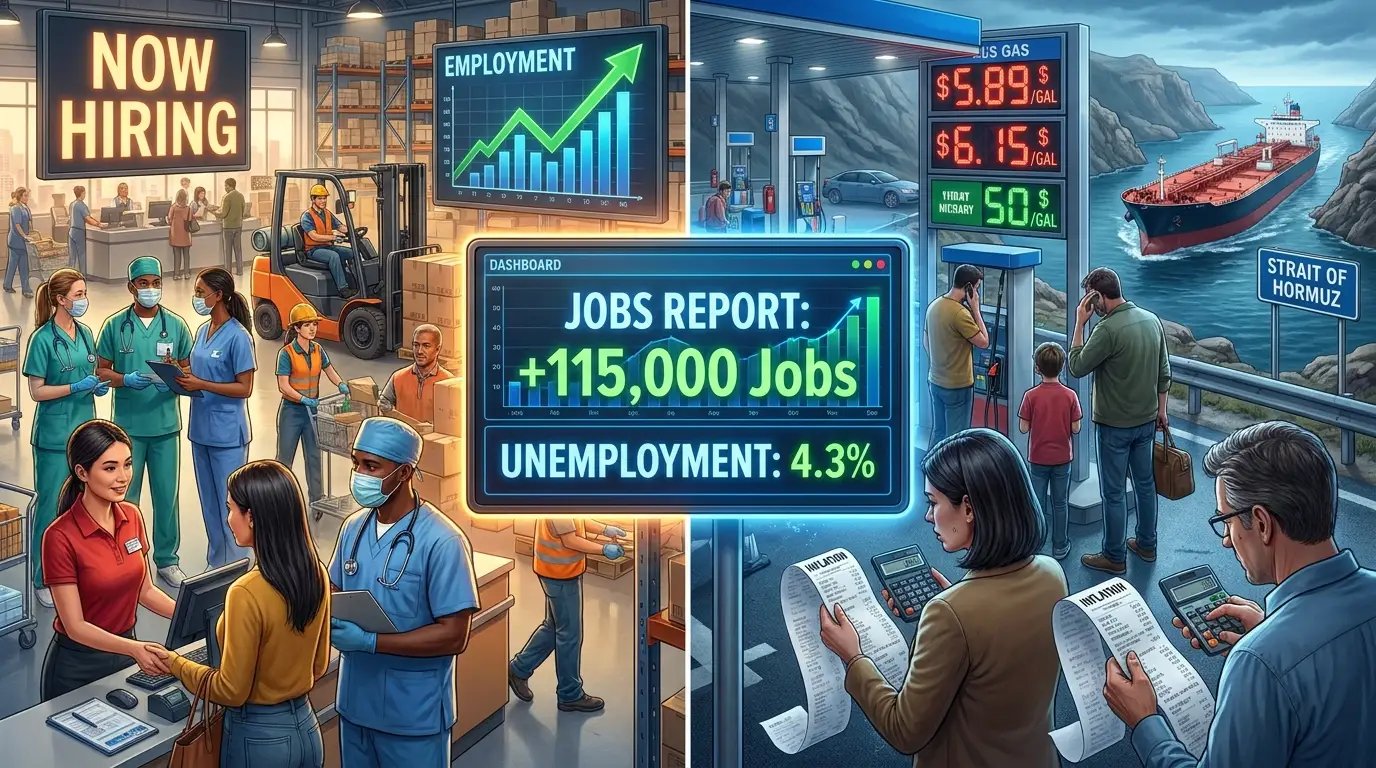
The US labor market showed unexpected resilience in April as employers added 115,000 jobs despite rising oil prices, inflation concerns, and economic uncertainty linked to the Iran conflict. While hiring remains uneven across industries, economists say stabilizing employment numbers suggest the American economy is adapting better than expected to ongoing geopolitical and inflationary pressures.
US Job Market Shows Unexpected Strength in April
The United States added 115,000 new jobs in April, outperforming economist expectations despite growing concerns surrounding inflation, energy prices, and the ongoing Iran conflict.
According to the latest employment data, the unemployment rate remained steady at 4.3%, signaling continued labor market stability even as businesses face mounting global economic uncertainty.
Economists had forecast significantly weaker hiring numbers amid concerns that rising fuel prices and geopolitical tensions would slow economic activity.
Healthcare and Transportation Lead Hiring Growth
Several industries continued expanding payrolls during April, led primarily by healthcare and transportation sectors.
Key hiring gains included:
Healthcare hiring remains one of the strongest long-term drivers of US job growth, largely fueled by America’s aging population and rising demand for medical services.
Meanwhile, manufacturing employment continued struggling despite efforts to boost domestic production policies.
Inflation and Energy Costs Continue Pressuring Consumers
Although hiring remained relatively strong, economists warned that rising inflation continues eroding wage growth for many households.
Average hourly earnings increased 3.6% year-over-year, but inflation is expected to outpace wage growth due to:
Gasoline prices in parts of the United States have now surpassed $4.50 per gallon following disruptions linked to tensions involving Iran and the Strait of Hormuz.
Iran Conflict Yet to Significantly Impact Hiring
Despite the ongoing Middle East conflict creating major disruptions in global energy markets, analysts say the economic fallout has not yet severely impacted the US labor market.
Economists believe several factors are helping stabilize employment:
Some experts say the economy now requires fewer new jobs each month to maintain stable unemployment compared to previous years.
Federal Reserve Likely to Hold Interest Rates Steady
The latest jobs report is expected to reinforce expectations that the Federal Reserve System will keep interest rates unchanged while monitoring inflation and global economic risks.
Federal Reserve officials remain increasingly focused on inflation pressures rather than labor market weakness as wage growth and hiring stabilize.
Recent corporate earnings reports have also remained relatively solid, supporting cautious optimism among investors and policymakers.
Labor Market Recovery Remains Uneven
While job growth has improved compared to the difficult labor market conditions of 2025, economists say the recovery remains inconsistent across sectors.
Healthcare continues driving most employment growth, while several other industries still face slower hiring and workforce reductions.
Analysts believe future labor market performance will depend heavily on:
Key Highlights

The Economic Times · 12 hours ago
ByteDance’s AI research unit, Seed, has established a dedicated Alignment & Preparedness team and launched an international search for speci...

The American Bazaar · 12 hours ago
Silicon Valley venture capital titan Andreessen Horowitz has eliminated most of its 34-member centralized "full stack talent" team, shifting...

The Economic Times (ET AI) · 12 hours ago
Zoho co-founder and chief scientist Sridhar Vembu has firmly rejected workforce cuts despite industry-wide SaaS contractions, committing ins...
From MyDigiFolio
One profile. Resume, vCard, portfolio, and email signatures — all generated in 3 minutes.
Build your page — freeWe use essential cookies for login and preferences, and optional cookies for analytics. Privacy policy.