TOP STORIES
US Senate Advances Bipartisan Bill to Fast-Track Data Center and Energy Project Permitting
MyDigiFolio Editors
3 min read
TOP STORIES
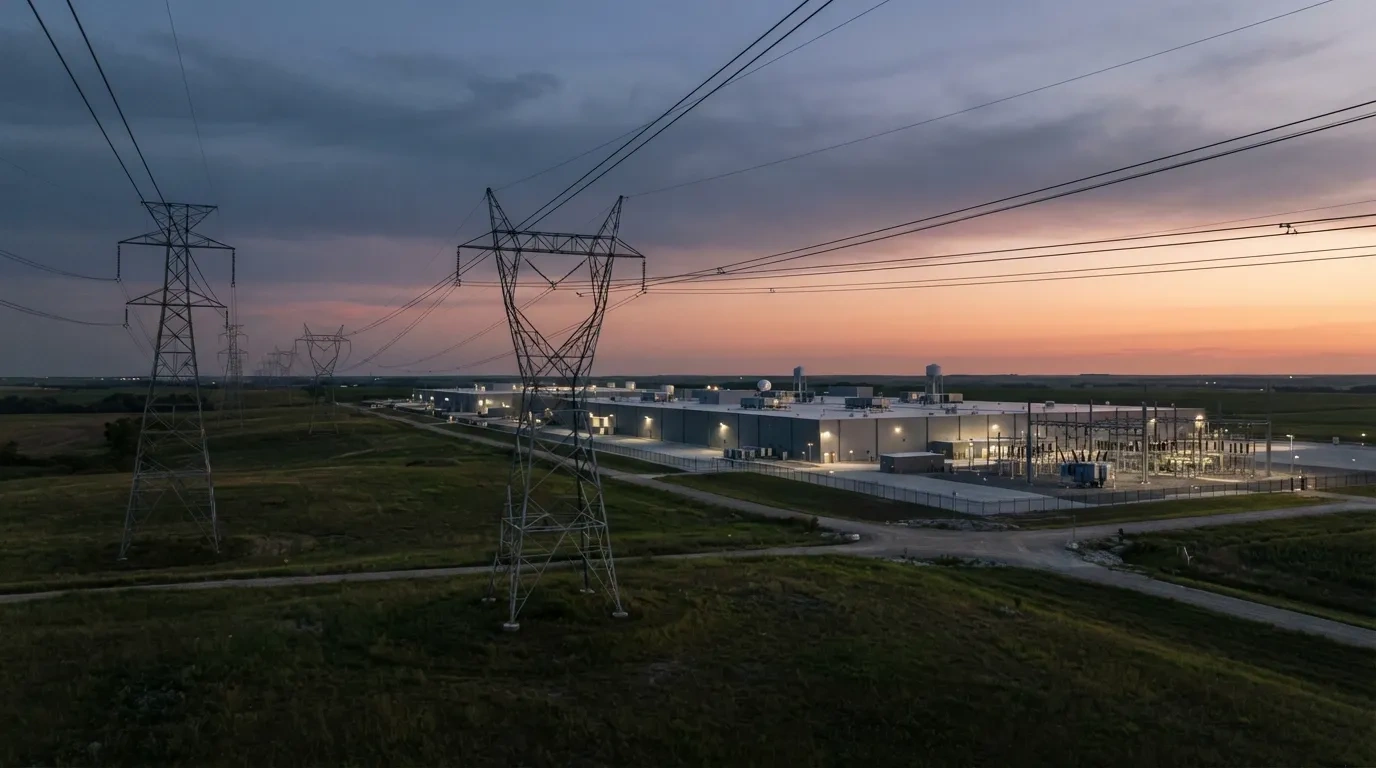
The US Senate voted 73-25 to advance landmark bipartisan permitting reform designed to break years-long interconnection bottlenecks for power projects and AI data centers. Negotiated by a four-senator coalition—Martin Heinrich, Sheldon Whitehouse, Shelley Moore Capito, and Mike Lee—the legislation accelerates review timelines under the National Environmental Policy Act (NEPA) across clean energy and fossil fuel initiatives. Crucially, the bill mandates that hyperscale data centers cover their full grid infrastructure costs rather than offloading peak power price spikes onto retail utility cons
In a major post-midterm legislative push, the United States Senate voted 73–25 to formally advance bipartisan permitting reform legislation aimed at expediting approvals for transmission lines, clean power, natural gas infrastructure, and artificial intelligence data centers.
The bill tackles the acute power grid bottlenecks threatening American industrial expansion and AI infrastructure. As multi-gigawatt computing clusters strain regional power grids and drive up household electricity bills, the legislation establishes sweeping federal review deadlines while codifying financial accountability: hyperscale data centers must pay for the incremental generation and transmission infrastructure they require, preventing private developers from passing power surcharges on to residential rate-payers.
The Core Coalition and the Legislative Overhaul The compromise was brokered by the bipartisan leadership of the Senate's energy and environment panels: Democrats Martin Heinrich (New Mexico) and Sheldon Whitehouse (Rhode Island), alongside Republicans Shelley Moore Capito (West Virginia) and Mike Lee (Utah):
Accelerating NEPA Timelines: The proposal streamlines National Environmental Policy Act (NEPA) assessments and restricts extended judicial review windows, targeting the bureaucratic delays that currently leave utility-scale power projects stranded in planning queues for up to seven years.
Tribal and State Consultation: A finalized amendment package released ahead of the vote mandates early federal consultation with Native American tribes regarding cultural heritage sites, while extending review windows for state agencies.
Ending Wind Buyouts: Whitehouse highlighted that the bill halts federal administrative settlements that used taxpayer funds to buy out and cancel offshore wind lease contracts, protecting renewable additions from executive rollbacks.
"Americans can't afford to wait for lower electricity prices. We need to pass this bill now... The reality is this: over the next several years, we will have no choice but to increase our national energy production. This is an unprecedented opportunity to come together." — Martin Heinrich (D-NM) & Shelley Moore Capito (R-WV)
Industry Alignment vs. Environmental Backlash The compromise has forged an uncommon corporate alliance while drawing steep resistance from climate and conservation advocates:
The Industry Bloc: The legislation is endorsed by both the American Clean Power Association (representing renewable developers) and the American Petroleum Institute (the oil and gas lobby), alongside backing from President Donald Trump, who characterized the package as a win for domestic energy dominance.
Conservation Resistance: Major advocacy groups—including the Sierra Club, National Wildlife Federation, and Conservation Law Foundation—oppose the measure. Critics argue that curtailing citizen legal challenges, easing pipeline permits, and modifying Endangered Species Act standards creates a "reckless" expansion corridor for fossil-fuel-powered data centers.
Dissent on Wind: Maryland Democratic Senator Chris Van Hollen voted against moving the bill, arguing it fails to shield East Coast offshore wind developments from executive obstruction.
Midterm Shifts and the House Gauntlet Despite clear 73-vote Senate momentum, the bill faces an uncertain path in the House of Representatives:
Shifting Dynamics: With Democrats securing a House majority in the recent midterm elections, incoming leadership is questioning whether to accept the compromise or hold out for narrower clean-energy-only legislation in the next congressional session.
House Scrutiny: Representative Hakeem Jeffries, slated to assume the House Speaker gavel in January, warned that the proposal "falls short" in vital regulatory protections.
As hyperscalers and utility operators scramble to balance multi-gigawatt AI workloads against grid stability, the Senate's decisive vote marks the most significant federal step yet toward overhauling US power infrastructure for the generative computing era.

Business Standard · 1 week ago
The era of unrestricted corporate API usage is giving way to strict unit economics as Amazon, Microsoft, Meta, and Uber push back against "t...

Business Standard · 1 week ago
Technology recruitment across India's Global Capability Centres (GCCs) fell 3.5% sequentially in Q2 FY27 as multinational parent firms shift...

The Economic Times · 1 week ago
Apple has begun tightening internal employee budgets for AI tools and API token consumption, cutting daily spending allowances for select en...
From MyDigiFolio
One profile. Resume, vCard, portfolio, and email signatures — all generated in 3 minutes.
Build your page — freeWe use essential cookies for login and preferences, and optional cookies for analytics. Privacy policy.