AI & TECH
Verizon Lands $2 Billion AI Infrastructure Deal With AWS to Power Data Center Fiber Connectivity
MyDigiFolio Editors
2 min read
AI & TECH
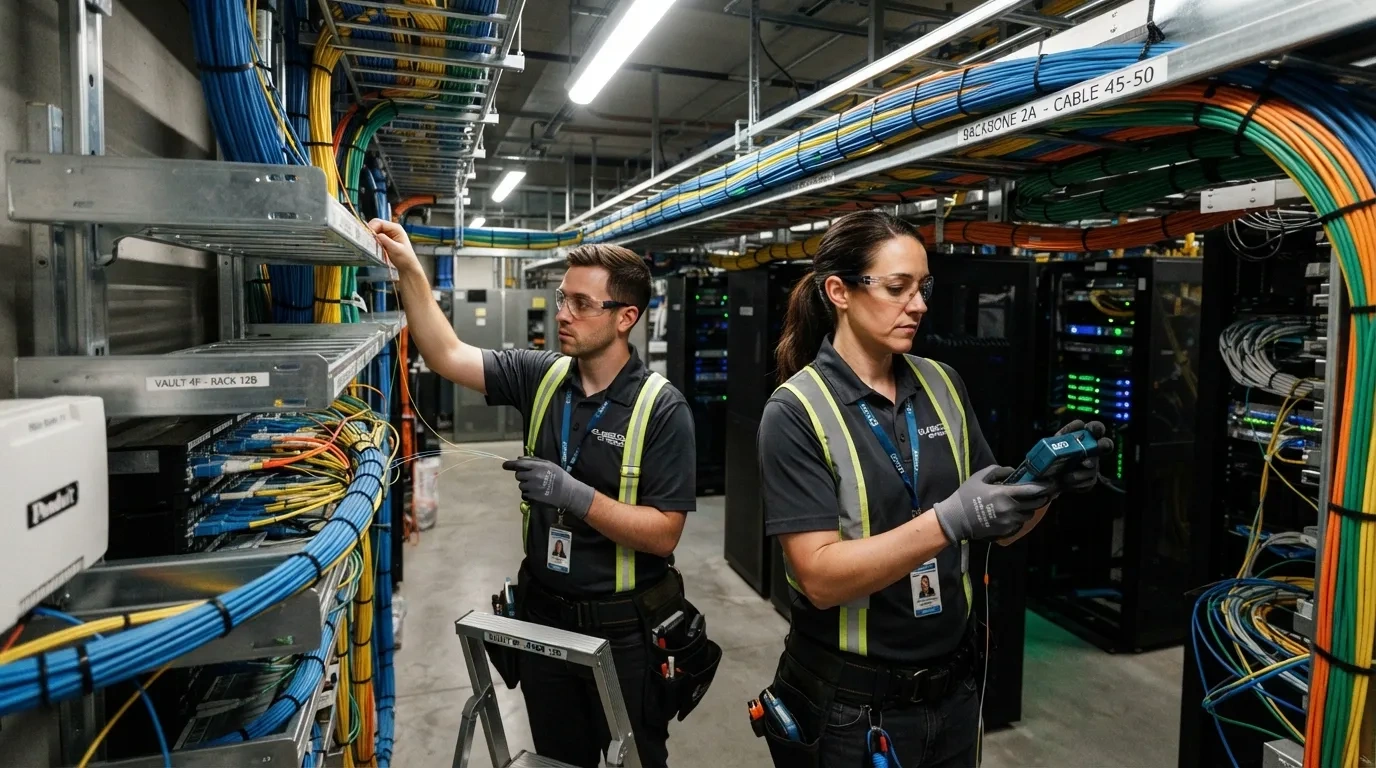
Verizon has signed an AI infrastructure agreement exceeding $2 billion with Amazon Web Services to build dedicated, high-capacity fiber networks linking AWS data centers. The multi-billion-dollar contract underscores telecom operators' aggressive push to monetize the compute boom through specialized optical connectivity. Alongside the deal, Verizon raised its full-year wireless subscriber growth targets despite third-quarter revenues missing Street projections on slow handset upgrades.
US telecommunications major Verizon has secured a landmark artificial intelligence infrastructure contract worth more than $2 billion with Amazon Web Services (AWS), marking another significant monetization win for telecom carriers feeding high-bandwidth pipelines into the hyperscale cloud.
Under the multi-year pact, Verizon will deploy high-capacity fiber-optic networks connecting AWS data centers, enabling low-latency, high-throughput inter-facility data transfers tailored for intensive artificial intelligence model training and inference traffic.
Building the Hyperscale Fiber Backbone The AWS contract reflects a broader strategy by Verizon to establish itself as the critical physical connectivity layer for tier-one cloud providers:
Scaling Cloud Backhaul: The fiber deployment is structured to eliminate throughput bottlenecks between enterprise compute clusters, ensuring seamless workloads across distributed AWS regions.
Second Cloud Mega-Deal: The partnership closely follows a separate $1 billion-plus agreement signed with Google in July to connect data centers using dark fiber, turning wholesale network infrastructure into a durable revenue growth engine.
Subscriber Outperformance vs. Handset Upgrade Drag The commercial agreement was unveiled alongside Verizon’s third-quarter financial figures, which presented a stark contrast between strong customer acquisitions and softening hardware turnover:
Postpaid Wireless Surge: Verizon added 406,000 monthly-bill-paying wireless phone subscribers during the quarter—nearly doubling Wall Street consensus estimates.
Upgraded Forecast: Buoyed by strong subscriber additions, the carrier lifted its full-year postpaid phone subscriber addition forecast to 1.1 million–1.2 million, up from its earlier guidance of 750,000 to 1 million.
Earnings Guidance Lift: Full-year adjusted earnings per share (EPS) expectations were revised upward to a range of $5.04 to $5.06, up from $4.99 to $5.04.
Revenue Shortfall: Group revenue for the quarter totaled $34.3 billion, missing analyst consensus of $34.74 billion. The shortfall was attributed to slumped consumer upgrade rates, as subscribers held onto existing smartphones longer following Verizon's strategic reduction in promotional device subsidies.
As legacy consumer hardware revenue plateaus, Verizon's ability to lock in multi-billion-dollar enterprise fiber commitments proves that hyperscaler compute demand remains one of telecom's most lucrative structural tailwinds.

ETTravelWorld (The Economic Times) · 1 day ago
Artificial intelligence agents are on track to manage or authorize 37% of corporate travel budgets globally by 2028, representing $700 billi...

Business Standard · 1 day ago
Marking a decade leading HCLTech, CEO C Vijayakumar warned that artificial intelligence has pushed the IT services sector to a historic infl...

Bloomberg · 1 day ago
Bloomberg AI researchers are presenting five papers at EMNLP 2026 in Budapest, detailing production-ready advances across enterprise RAG, mu...
From MyDigiFolio
One profile. Resume, vCard, portfolio, and email signatures — all generated in 3 minutes.
Build your page — freeWe use essential cookies for login and preferences, and optional cookies for analytics. Privacy policy.