In today’s competitive job market, landing an interview requires passing through two completely different gates:
The Automated Gate (The ATS): Software algorithms scan your document looking for specific keywords, single-column formatting, and clean text hierarchy.
The Human Gate (The Hiring Manager): A person with limited time needs to decide whether you can actually solve their team's problems better than fifty other applicants.
Many job seekers fail because they try to make a single document do both jobs.
If you pack your resume with graphics, project screenshots, and visual timelines to impress the human, the automated tracking system chokes on the formatting and discards your application. But if you strip away all design and submit a purely text-based document, the human reviewer is left with a dry list of claims and no tangible proof of your abilities.
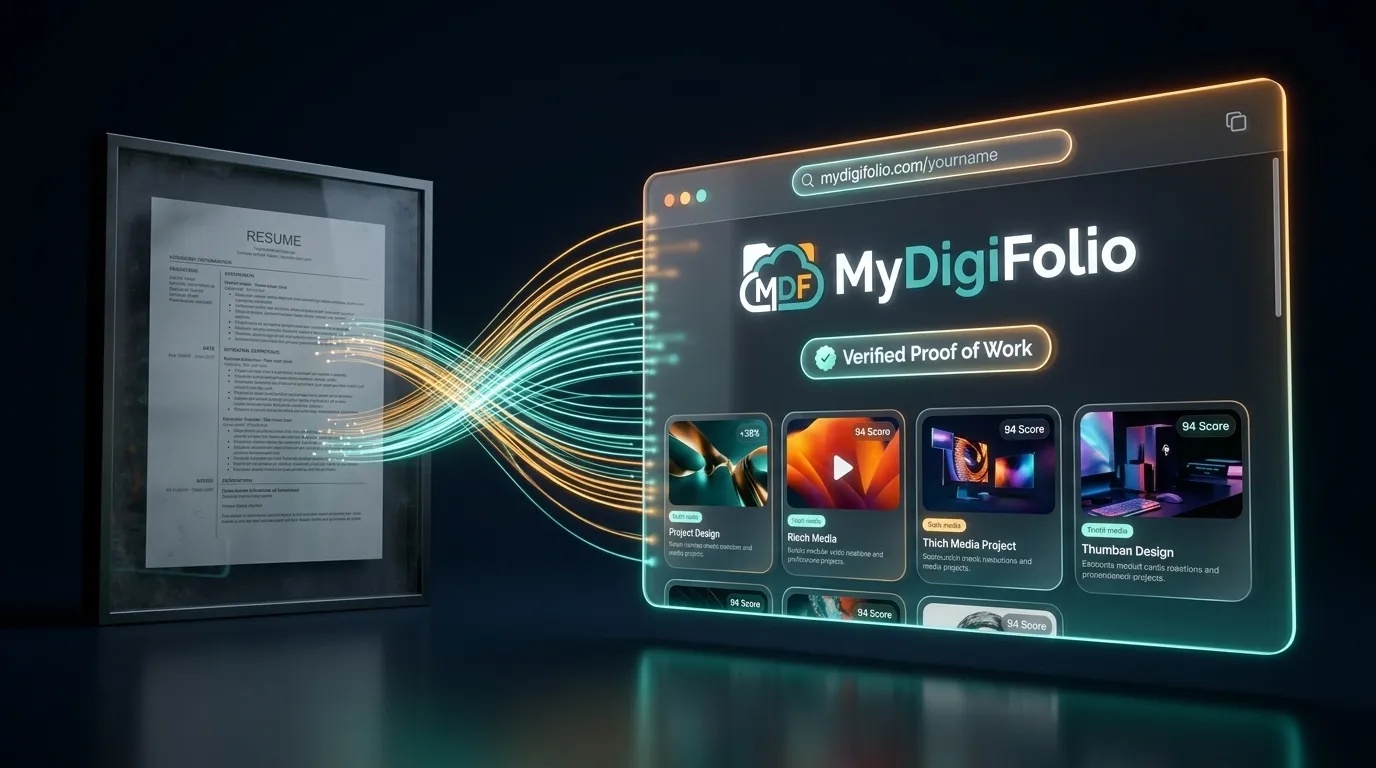
The solution is not to compromise between the two. The solution is to use an ATS-friendly resume to clear the software filter, paired with a live online portfolio to win over the hiring manager.
1. Resumes State Claims; Portfolios Provide Proof
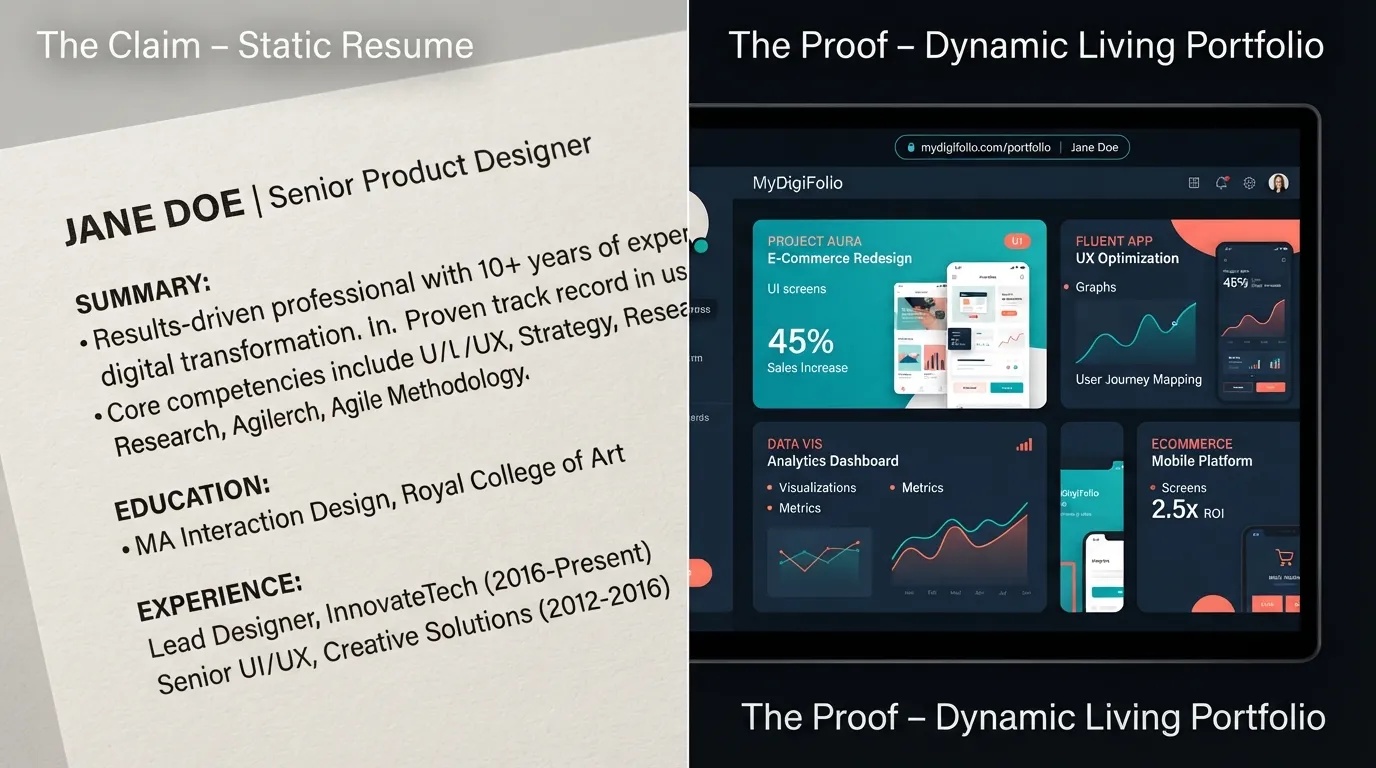
Anyone can write "Managed end-to-end launch of a customer web app" or "Designed high-converting marketing campaigns" on a resume. Hiring managers read variations of those exact sentences dozens of times a day.
A bullet point is an unverified claim. An online portfolio provides the evidence:
For Developers: A portfolio links directly to live web applications, clean GitHub repositories, and architectural breakdowns.
For Designers & Marketers: It showcases user flows, wireframes, A/B testing data, and before-and-after visual results.
For Writers & Strategists: It presents published articles, whitepapers, strategic proposals, and client feedback.
When a recruiter clicks your personal link and sees tangible proof of your work, their hiring risk drops to near zero.
2. The One-Page Resume Cannot Tell Your Whole Story
The golden rule of resume writing is brevity: keep your document concise, focused, and ideally to one page. While this helps recruiters scan your career history quickly, it forces you to omit valuable context:
You cannot explain the roadblocks you encountered and how you overcame them.
You cannot show the iterations and drafts that led to the final product.
You cannot display the visual, interactive, or collaborative aspects of your achievements.
An online portfolio removes artificial space limits. Your resume acts as the high-level executive summary, while your portfolio provides the comprehensive deep dive for reviewers who want to see more.
3. A Live URL Keeps Your Work Continuously Updated
When you submit a static PDF to an employer's job portal, that file is frozen in time. If you earn a new certification next week, ship an impressive project, or receive a recommendation, the recruiter looking at the file stored in their system has no way of knowing.
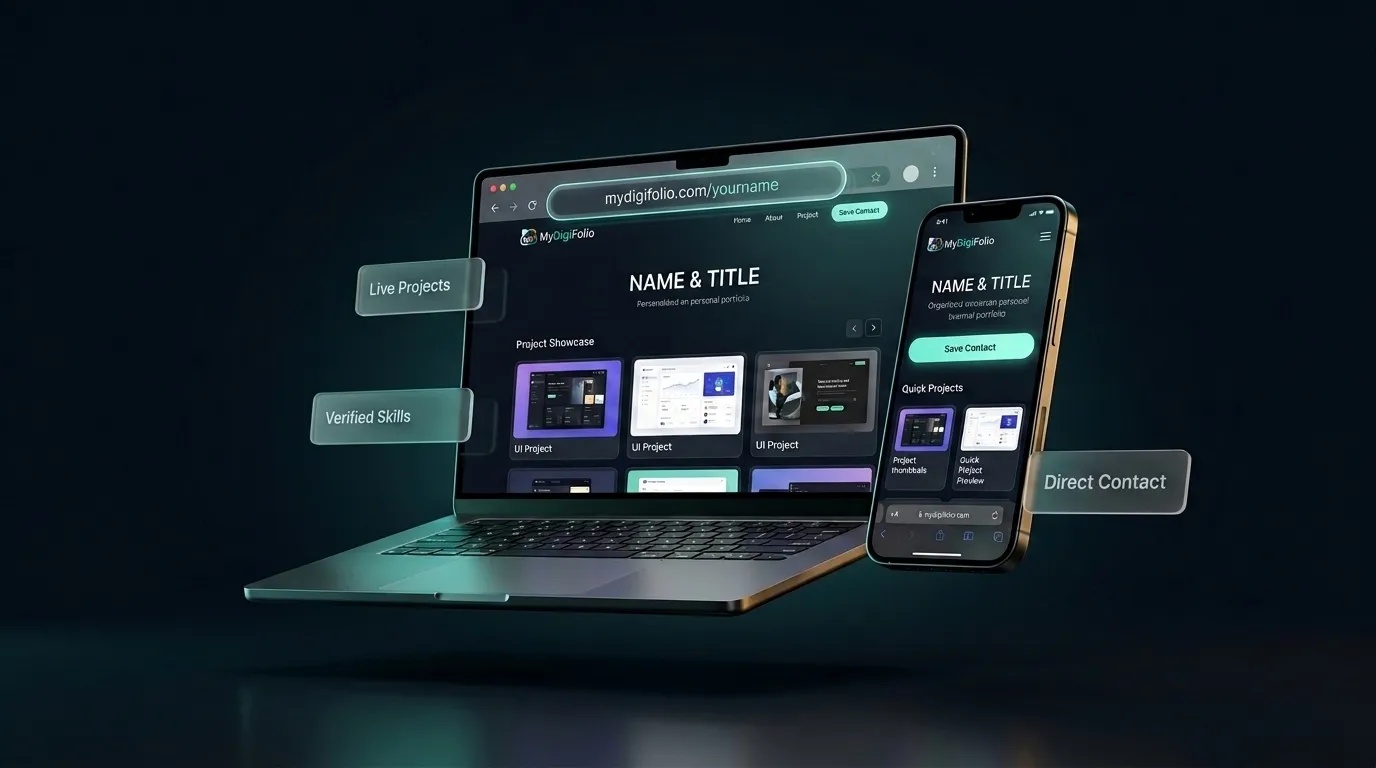
A personalized web link—such as [mydigifolio.com/yourname](https://mydigifolio.com/yourname)—is dynamic. Whenever someone opens your link from an old application, a past email thread, or a LinkedIn message, they always see your most recent achievements, active skills, and latest projects.
4. How to Link Your Portfolio to Your Resume Correctly
To get the full benefit of this combination, your portfolio link must be positioned where humans will see it and where ATS parsers will not break:
Place It in the Contact Header: Your portfolio link belongs at the very top of your resume, right alongside your email, phone number, and location.
Use a Clean, Branded URL: Avoid pasting long, messy URLs with random numbers or complicated folder paths. A clean, branded link like
[mydigifolio.com/yourname](https://mydigifolio.com/yourname)looks intentional and professional.Make It Clickable: Ensure the link is live and hyperlinked in your PDF export so recruiters can open it in a single click without copying and pasting.
5. Why Building a Portfolio Used to Be Painful
Historically, having an online portfolio meant choosing between two bad options:
Coding from Scratch: Buying a domain name, setting up web hosting, and writing HTML, CSS, and JavaScript by hand—taking weeks away from interview prep.
Expensive Website Builders: Paying $16 to $30 every month on platforms like Squarespace or Wix, only to spend days wrestling with responsive layouts, mobile breakpoints, and complex plugins.
Even worse, website builders only solve the web page. They leave you completely on your own to format a separate resume that won't break when scanned by company hiring software.
6. Build Both for Free with MyDigiFolio
You do not need to spend money on monthly hosting or juggle disconnected templates to establish a credible online presence.
MyDigiFolio unifies your entire career identity into one seamless platform. Instead of maintaining separate tools, you enter your background, work history, and project milestones into your dashboard once:
Free Live Online Portfolio: Get a clean, mobile-optimized webpage at
[mydigifolio.com/yourname](https://mydigifolio.com/yourname)to showcase your case studies, verified skills, and background without writing any code.Free ATS-Scored CV Builder: Export clean, single-column PDF and DOCX resumes engineered to pass automated applicant tracking systems with top scores.
Free Digital vCard with QR Code: Keep a scannable contact card on your phone to instantly share your portfolio and credentials during networking events.
Free HTML Email Signature: Add a polished, clickable sign-off to Gmail or Outlook that turns everyday application emails into portfolio traffic.
When you complete a new project or update your skills, you update your dashboard once—and your resume, live portfolio, and digital card all synchronize automatically in real time.
No subscription fees. No paywalls at the download screen. No credit card required.
Give Recruiters the Complete Picture
A resume opens the door; an online portfolio wins the job. Give hiring teams both the clean document their software expects and the live proof of work their decision-makers want to see.
👉