CAREERS
China’s Solar Giants Cut 40,000 Jobs as Chronic Overcapacity and Severe Price Wars Deepen Financial Losses
MyDigiFolio Editors
2 min read
CAREERS
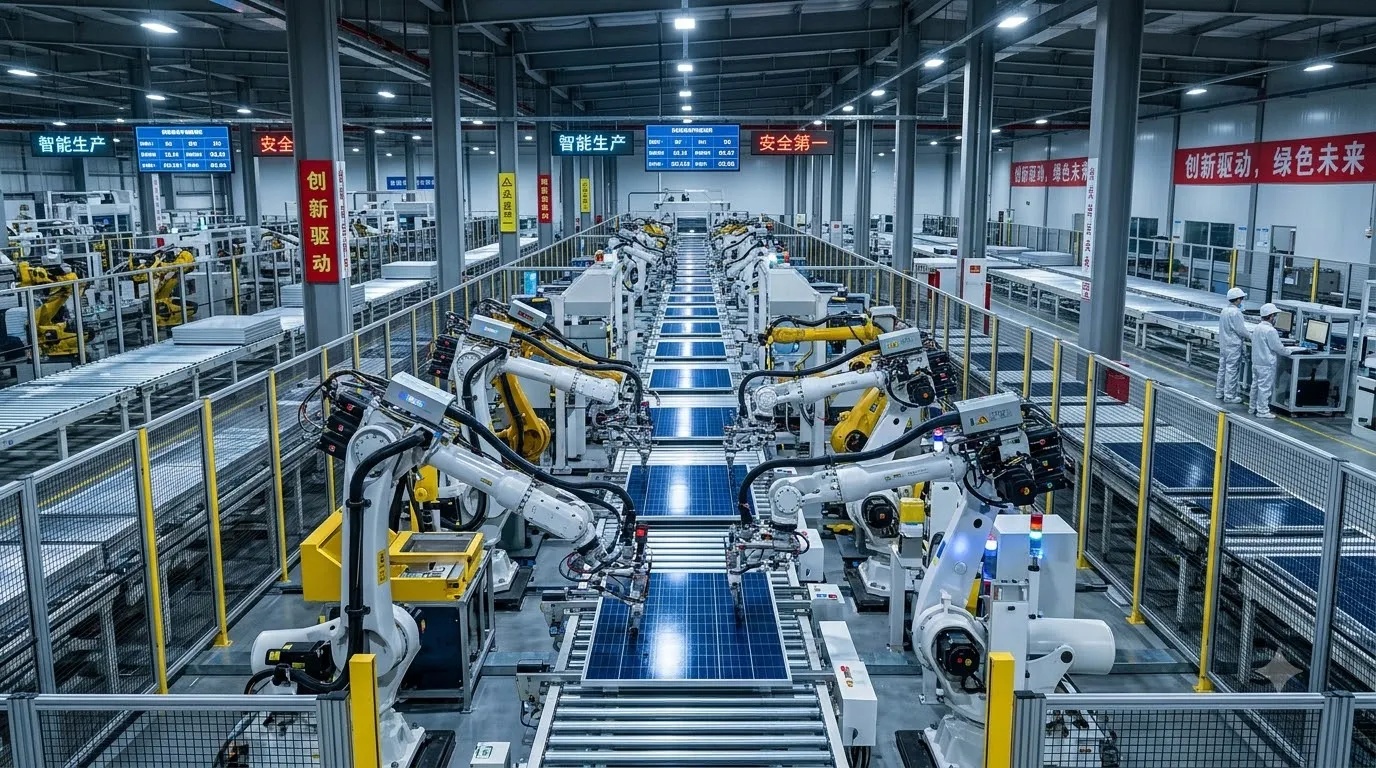
China’s top five solar manufacturers slashed their combined workforce by 21%—shedding 40,589 jobs—as severe domestic overcapacity roughly double global demand drove average selling prices below production costs. Despite surging worldwide interest in renewable energy security, manufacturers remain locked in deep operational losses, with upcoming statutory efficiency and energy-intensity benchmarks in 2027 viewed as the primary mechanism to force excess capacity out of the market.
China’s leading solar equipment manufacturers eliminated more than a fifth of their collective workforce last year, according to a Reuters analysis of regulatory filings, as government-led initiatives to curb industrial overcapacity have yet to return the sector to profitability. The top five producers—Longi Green Energy, Trina Solar, JinkoSolar, JA Solar, and Tongwei—employed 154,061 people at the close of 2025, reflecting a net reduction of 40,589 roles (a 21% decrease) year-over-year. This follows a 31% workforce drop recorded in 2024, meaning the five companies have halved their aggregate headcount over a two-year stretch.
The Green Energy Paradox: Record Demand vs. Sub-Cost Selling Although the geopolitical landscape and Hormuz energy disruptions have strengthened the security argument for renewable infrastructure, Chinese manufacturers face continuous financial losses:
"If you're not making gross margins, then no matter how much cost you cut, it is basically just reducing your loss." — Alan Lau, Analyst, Jefferies
Domestic Policy Shifts and Export Contraction Workforce downsizing has concentrated across factory floor production, administrative overhead, and R&D divisions. Longi scaled back research and development expenditure by 15%, Tongwei reduced its technical personnel headcount by 21%, and Trina reported voluntary attrition rates reaching 18% to 19%.
Market headwinds expanded further into 2026: Subsidy Removal: Beijing replaced guaranteed renewable feed-in returns with competitive market-based auctions, cooling local deployment. Jefferies projects China's domestic installations will fall to 150–200 gigawatts (GW) this year, down from a historic 315 GW in 2025. Export Declines: Chinese export volumes of solar panels and cells contracted by 10% year-on-year from January through August. Regulatory Bottom: Morningstar analysts indicate the industry may finally clear excess supply when China's mandatory energy-intensity rules for polysilicon/wafers and higher module efficiency mandates take effect on January 1, 2027, forcing non-compliant factories into closure.

The Economic Times · 9 hours ago
ICICI Life Insurance plans to onboard 20,000 women financial advisors nationwide by the close of FY2027 under its flagship Narishakti initia...

The Times of India · 9 hours ago
UCO Bank has announced 530 apprentice positions across India under the Apprentices Act, 1961, with the application window open until October...

The Economic Times (EnterpriseAI) · 3 days ago
Tata Consultancy Services plans to ensure that 80% of its future workforce additions possess artificial intelligence and new-age digital cap...
From MyDigiFolio
One profile. Resume, vCard, portfolio, and email signatures — all generated in 3 minutes.
Build your page — freeWe use essential cookies for login and preferences, and optional cookies for analytics. Privacy policy.