CAREERS
MBA Graduates Earn 52% More Than Engineers in 2026 Placements as Employers Seek Business and Tech Skills
MyDigiFolio Editors
5 min read
CAREERS

MBA graduates recorded a 52% salary premium over engineering graduates in the 2026 campus placement cycle, with the gap projected to reach 59% for the class of 2027. The trend reflects growing demand for professionals who can combine technical knowledge with business skills, leadership and adaptability.
For years, engineering has been viewed as one of India’s most dependable routes to a strong career. However, campus placement data now shows a significant shift, with MBA graduates earning higher salaries than engineering graduates.
According to Deloitte India’s Campus Workforce Trends 2026 report, MBA graduates received campus placement packages that were 52% higher than those of engineering graduates during the 2026 placement cycle. The gap was 47% for the previous graduating class and is projected to increase to 59% for the class of 2027.
The changing salary gap reflects how employers are increasingly looking for professionals who can combine technical knowledge with business understanding, decision-making and leadership.Technology and business skills are converging
Engineering continues to remain important as technology becomes increasingly central across industries. However, AI is changing the nature of many technical roles by automating coding, speeding up analysis and handling repetitive work.
As technology takes on more execution-based tasks, companies are placing greater importance on people who can identify business opportunities, make strategic decisions and translate technology into measurable business outcomes.
Questions around product-market fit, customer demand, technology investments and business strategy increasingly require both technical and management understanding. Deloitte’s survey of 250 organisations also points to growing importance being placed on management and leadership capabilities alongside technical expertise.
This shift is visible across areas such as finance, marketing, operations and manufacturing, where AI and analytics are changing how businesses operate.
MBA value extends beyond starting salary
The growing salary premium for MBA graduates is also linked to the broader career mobility that management education can provide.
According to Dr Umesh Kothari, Assistant Dean, PG Programmes and Assistant Professor at SP Jain School of Global Management, AI, automation and data-driven decision-making are increasing the need for professionals who understand how technology affects customers, operations, markets and profitability.
An MBA can provide opportunities across consulting, product management, finance, strategy and entrepreneurship. However, its value depends increasingly on analytical skills, business knowledge, leadership and the ability to adapt.
Professionals who connect technology and business
Several emerging career paths now sit between traditional technology and management roles. Product management, consulting, digital transformation, AI strategy and analytics often require knowledge of both areas.
Product managers need to understand engineering capabilities as well as customer requirements. Digital transformation professionals need to consider technology, adoption and business outcomes, while AI strategists need to assess where AI can create commercial value.
Dr Vidhya Srinivas, Director, Corporate & Career Services, describes this as a move towards capability-led hiring rather than qualification-led hiring. Professionals who can convert technical complexity into practical business decisions could become increasingly valuable.
AI is influencing recruitment and skills demand
Deloitte’s findings indicate that AI is having a major impact on recruitment. 86% of organisations say AI is reshaping hiring, while 35% report new roles or skill requirements, compared with 21% in FY25.
Around 80% of organisations have dedicated campus-hiring teams, while pre-placement offers are also increasing.
AI and data skills can attract a 20–25% premium, while analytical and problem-solving abilities can command a 10–15% premium. This highlights the growing importance of combining technology skills with business judgement.
Rohit Sindhwani of MDI Gurgaon says business schools need to focus on critical thinking, ethics, practical business challenges and lifelong learning as technology takes over more tasks.
Institution continues to influence MBA salaries
The salary advantage does not mean every MBA graduate will receive a high package.
Deloitte’s data shows that students from India’s top 10 B-schools earned an average of Rs 27.4 lakh in FY26, compared with Rs 8.4 lakh at tier-3 B-schools.
Among BTech graduates, the corresponding figures were Rs 18.7 lakh and Rs 5.75 lakh.
The figures demonstrate the significant role played by the institution, recruiters, course costs and available career opportunities. The survey covers 505 campuses based on NIRF rankings, including leading IIMs, IIT management schools and other institutions.
Therefore, the 52% MBA salary premium is an overall finding and should not be considered a guarantee for every graduate.
Engineering is changing rather than disappearing
The changing salary landscape does not mean engineering is becoming irrelevant. India continues to require engineers, developers, data specialists and semiconductor professionals.
Instead, technical professionals are increasingly expected to develop business and leadership capabilities alongside their core expertise.
Engineers who build business skills can move towards product management, strategy, consulting and leadership roles. Similarly, MBA graduates who develop AI, data and digital capabilities can strengthen their career opportunities.
The Deloitte findings also highlight the importance of behavioural skills, adaptability and continuous learning.
A broader definition of career readiness
Pratham Barot, CEO and Co-Founder of Zell Education, says professional education is going through an important transition as AI and digital tools change finance, accounting and business functions.
Career readiness is increasingly extending beyond academic qualifications to include domain knowledge, practical experience, digital skills and continuous learning.
Internships, projects, problem-solving abilities and digital skills can therefore play an important role alongside formal qualifications.
The data also shows that one-year attrition among hires from top-10 and tier-1 institutes has declined from 23% to 19%, indicating a greater focus on retaining talent and its long-term value.
What should students choose?
There is no single degree that is right for everyone.
Students interested in engineering and technology do not necessarily need to switch paths because MBA graduates currently have a salary advantage. Similarly, students interested in strategy, finance or leadership do not need to select engineering simply because of its traditional reputation.
The more important consideration is the combination of skills developed after graduation. Engineers who understand business and MBA graduates who understand technology may both benefit as employers increasingly seek professionals who can work across disciplines.
The changing career equation
The projected 59% MBA salary premium for the class of 2027 highlights a broader change in what employers value.
Technical expertise remains important, but it is increasingly being combined with business understanding, judgement, communication, leadership and adaptability.
The latest hiring environment suggests that career success is becoming less dependent on a particular degree and more dependent on the ability to develop relevant skills and continue learning as the workplace changes.

The Economic Times · 12 hours ago
ICICI Life Insurance plans to onboard 20,000 women financial advisors nationwide by the close of FY2027 under its flagship Narishakti initia...

The Times of India · 12 hours ago
UCO Bank has announced 530 apprentice positions across India under the Apprentices Act, 1961, with the application window open until October...
The Economic Times · 1 day ago
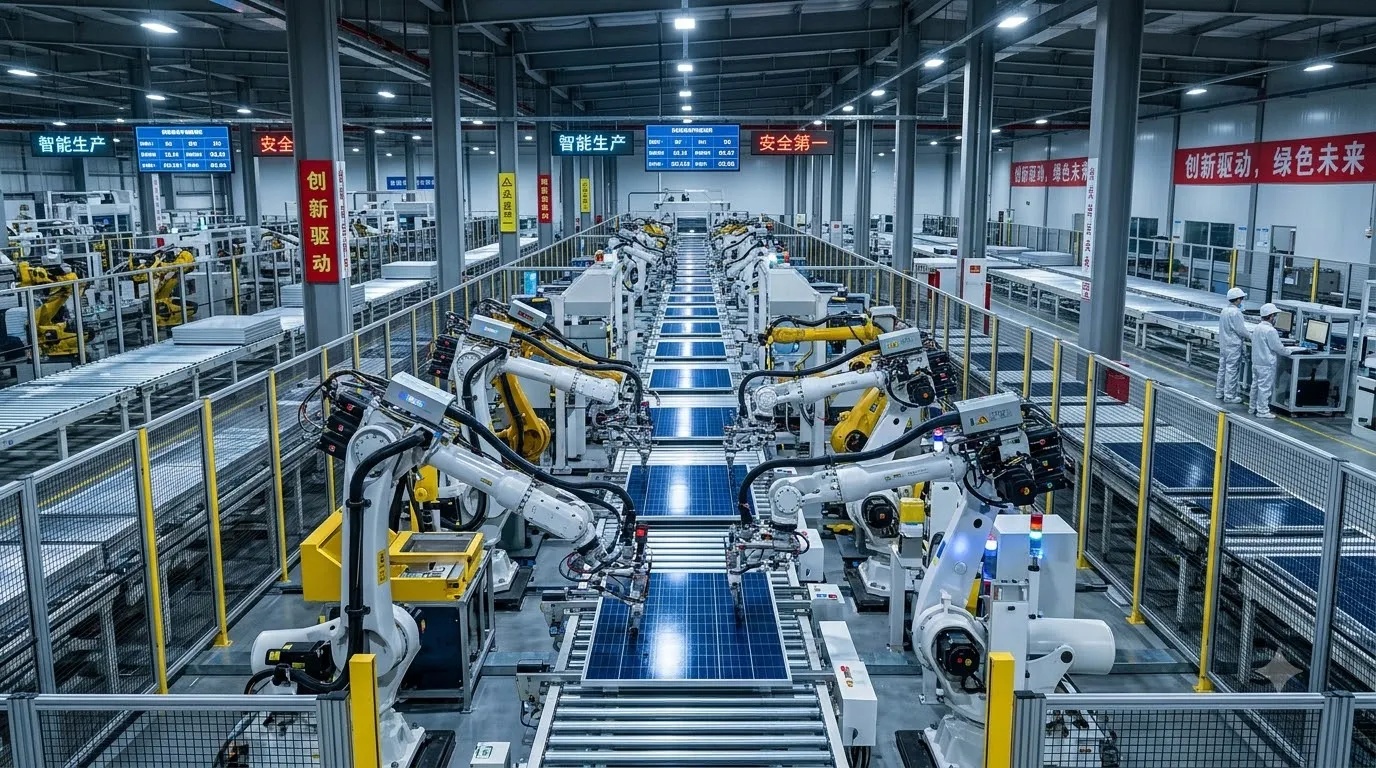
China’s top five solar manufacturers slashed their combined workforce by 21%—shedding 40,589 jobs—as severe domestic overcapacity roughly do...
From MyDigiFolio
One profile. Resume, vCard, portfolio, and email signatures — all generated in 3 minutes.
Build your page — freeWe use essential cookies for login and preferences, and optional cookies for analytics. Privacy policy.